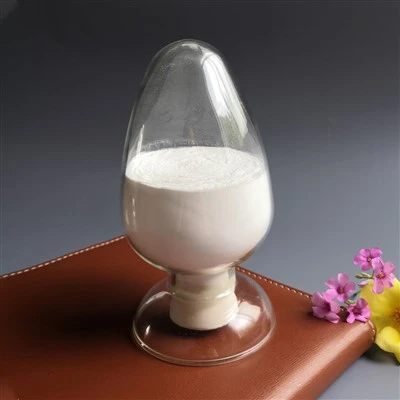
Hierarchical porous boehmite materials have attracted significant attention in various scientific and industrial fields due to their unique properties. As a boehmite supplier, I have witnessed firsthand the growing demand for these materials and the diverse applications they serve. In this blog, I will delve into the properties of hierarchical porous boehmite materials, exploring how these properties make them suitable for a wide range of uses. Boehmite
Structural Properties
One of the most distinctive features of hierarchical porous boehmite materials is their hierarchical pore structure. This structure consists of multiple levels of pores with different sizes, typically including micropores (pores with diameters less than 2 nm), mesopores (pores with diameters between 2 – 50 nm), and macropores (pores with diameters greater than 50 nm). The co – existence of these different pore sizes provides several advantages.
The micropores offer a large specific surface area, which is crucial for applications such as adsorption and catalysis. A high specific surface area allows for a greater number of active sites on the material’s surface, enhancing the interaction between the material and the target molecules. For example, in gas adsorption applications, the large surface area provided by micropores enables the efficient capture of small gas molecules.
Mesopores, on the other hand, act as transport channels for molecules. They facilitate the diffusion of larger molecules into and out of the material, which is essential for processes where mass transfer is a limiting factor. In catalytic reactions, the mesopores allow reactant molecules to access the active sites located within the material more easily, improving the reaction rate and selectivity.
Macropores play a role in enhancing the mass transport of large – scale substances. They can act as highways for the flow of fluids, reducing the diffusion resistance and improving the overall efficiency of the material in applications such as filtration and separation. The hierarchical arrangement of these pores creates a well – connected network that optimizes both surface area utilization and mass transfer processes.
Chemical Properties
Boehmite, with the chemical formula AlO(OH), is an aluminum oxide hydroxide. Hierarchical porous boehmite materials inherit several important chemical properties from boehmite.
Firstly, boehmite is amphoteric, which means it can react with both acids and bases. In acidic conditions, the hydroxyl groups on the surface of boehmite can react with protons from the acid. For example, when reacting with hydrochloric acid (HCl), the following reaction occurs: AlO(OH)+3HCl = AlCl₃ + 2H₂O. In basic conditions, boehmite can react with hydroxide ions. This amphoteric nature makes hierarchical porous boehmite materials useful in applications such as acid – base catalysis and wastewater treatment, where they can interact with a wide range of chemical species.
Secondly, hierarchical porous boehmite materials have a relatively high thermal stability. They can withstand moderately high temperatures without significant structural degradation. This property is beneficial in high – temperature applications such as catalysis in petrochemical processes and refractory materials. At elevated temperatures, the hierarchical pore structure can remain intact, ensuring the continued effectiveness of the material.
Mechanical Properties
The mechanical properties of hierarchical porous boehmite materials are also important, especially in applications where the material needs to withstand physical forces. Despite their porous nature, well – synthesized hierarchical porous boehmite materials can have a reasonable degree of mechanical strength.
The interconnected pore structure provides a certain degree of reinforcement. The walls between the pores act as a framework that can resist external pressures to some extent. This mechanical strength allows them to be used in applications such as adsorbent beds, where they need to support the weight of the flowing fluids and the adsorbed substances without collapsing.
However, it is important to note that the mechanical properties can be influenced by factors such as the pore size distribution, porosity, and the synthesis method. For example, materials with a high porosity may have lower mechanical strength compared to those with a more optimized pore structure. Therefore, careful control of the synthesis process is crucial to achieve the desired balance between porosity and mechanical strength.
Surface Properties
The surface properties of hierarchical porous boehmite materials are of great significance in many applications. The surface of boehmite is rich in hydroxyl groups (-OH), which can participate in various surface reactions.
The hydroxyl groups can form hydrogen bonds with other molecules, making the material highly hydrophilic. This hydrophilicity is advantageous in applications such as water treatment, where it can enhance the adsorption of polar contaminants. Additionally, the surface hydroxyl groups can be functionalized through chemical modification. For instance, they can be reacted with organic compounds to introduce specific functional groups on the surface, which can be used to tailor the material’s properties for specific applications. This surface modification can improve the selectivity of the material in adsorption and catalysis processes.
Applications
The unique combination of structural, chemical, mechanical, and surface properties of hierarchical porous boehmite materials makes them suitable for a wide range of applications.
In the field of catalysis, the large specific surface area and hierarchical pore structure provide an ideal environment for catalytic reactions. The active sites on the surface can catalyze various chemical reactions, and the well – connected pore network ensures efficient mass transfer of reactants and products. For example, they can be used as catalysts or catalyst supports in the petroleum refining industry for reactions such as hydrocracking and desulfurization.
In adsorption applications, the high specific surface area and the presence of different pore sizes enable the efficient removal of a variety of contaminants from gases and liquids. They can be used in water purification to adsorb heavy metals, organic pollutants, and dyes. In gas purification, they can capture harmful gases such as sulfur dioxide (SO₂) and nitrogen oxides (NOₓ).
In the field of materials science, hierarchical porous boehmite materials can be used as precursors for the preparation of other aluminum – based materials, such as alumina ceramics. The hierarchical pore structure can be maintained during the conversion process, resulting in ceramics with unique properties such as high surface area and enhanced permeation.
Conclusion
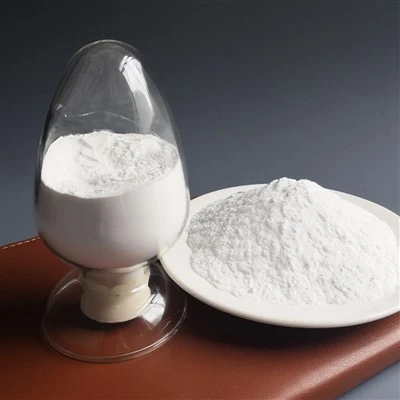
In conclusion, hierarchical porous boehmite materials possess a set of remarkable properties that make them highly valuable in numerous scientific and industrial applications. Their hierarchical pore structure, chemical amphotericity, thermal stability, reasonable mechanical strength, and unique surface properties all contribute to their versatility.
Boehmite As a boehmite supplier, I am well – aware of the potential of these materials and the increasing demand from various industries. If you are interested in procuring high – quality hierarchical porous boehmite materials for your specific application, I invite you to reach out to me for a detailed discussion. We can work together to understand your requirements and provide the most suitable solution.
References
- Anderson, M. A., & Brinker, C. J. (Eds.). (1996). Better Ceramics Through Chemistry V. Materials Research Society Symposium Proceedings.
- Corma, A. (1997). From microporous to mesoporous molecular – sieve materials and their use in catalysis. Chemical Reviews, 97(6), 2373 – 2419.
- Schmidt, W., & Stähler, H. (1980). Thermal decomposition of boehmite. Berichte der Bunsengesellschaft für physikalische Chemie, 84(10), 931 – 937.
Luoyang Zhongchao New Material Co., Ltd.
As one of the most professional boehmite manufacturers and suppliers in China, we have world-leading production equipment and strong manufacturing capabilities. Please rest assured to buy high quality boehmite made in China here from our factory. For price consultation, contact us.
Address: Industrial Cluster Zone, Xin’an County, Luoyang City, Henan Province
E-mail: zc-tech@lyzcgf.com
WebSite: https://www.zc-aths.com/
