Over the past five years, I’ve spent countless conversations with automotive manufacturing engineers standing on shop floors, leaning over lines that move at speeds I still struggle to wrap my head around—20, 30, even 60 vehicles per hour. Half the time, they’re yelling over the whine of stamping presses and the hum of robotic arms, asking the same question: “Can we trust anything as precise, consistent, or durable as the machine vision laser modules you sell to hold up on our line?” For a long time, that question felt like a pivot point for our small company—one that could either cement our place in automotive or relegate us to a niche market of 3D printing and electronics assembly. Today, I can say with confidence: not only can machine vision laser modules be used in vehicle manufacturing, they’re already irreplaceable to the engineers who build everything from compact sedans to heavy-duty trucks. Machine Vision Laser Modules
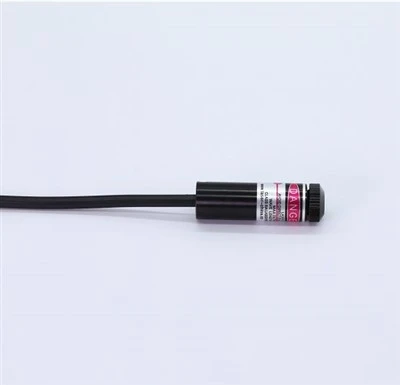
Let’s start with what most people don’t see about vehicle assembly. A car isn’t just parts bolted together—it’s a series of tiny, high-stakes checks that happen every few seconds. When a robotic arm welds two door panels, it can’t just guess where the panel ends. It needs to know the exact position of the seam within 0.1 millimeters, otherwise the weld will be weak, the door will rattle at highway speeds, or it won’t line up with the car’s frame. That’s where machine vision laser modules come in. Unlike a standard camera that just takes a 2D snapshot, a laser module projects a thin, uniform line across a part, and the camera attached to it measures how that line bends or shifts. That’s called laser triangulation, and it’s the core of how we do everything from aligning chassis components to inspecting interior trim.
I remember the first time a team at a mid-size pickup manufacturer tested our modules back in 2019. They were running into a problem: their welding line was throwing out 12% of doors due to misalignment, and their existing sensors couldn’t pick up the tiny burrs left from stamping that threw off measurements. They tried infrared sensors, ultrasonic tools, even manual gauges—nothing worked because those methods can’t detect surface irregularities or subtle shifts in shape. Our machine vision laser modules, with a 650nm red laser and a resolution of 0.05mm, could scan the door’s edge in 80 milliseconds, map the entire profile, and tell the robot exactly where to adjust its welding head. In six weeks, that defect rate dropped to 1.8%. That’s the kind of impact we’re talking about—not just a small upgrade, but a line-saving change that cuts thousands of dollars in waste every month.
But it’s not just welding. Vehicle manufacturing has a handful of other pain points that machine vision laser modules solve better than any alternative. Take assembly of electric vehicle (EV) battery packs, the most expensive and safety-critical part of a modern car. A battery pack is made up of hundreds of individual cells, packed into trays with cooling channels, busbars, and sealing gaskets. If any of those cells are misaligned by even a fraction of a millimeter, the cooling system will fail, leading to overheating, or the busbars won’t make a proper connection, reducing range. Our modules are small enough to mount directly to the robotic arms that handle cell placement, can scan multiple surfaces at once, and operate in the dusty, high-temperature environment of a battery assembly line. A major European EV producer recently switched to our modules for their new line, reporting that their cell assembly defect rate fell by 92% and their line efficiency jumped by 14%. That’s not just a win—it’s a game-changer for a sector where every mile of range and every dollar of production cost matters.
Another big area is final assembly and quality control. Most plants still use human inspectors to check for trim misalignments, paint defects, and panel gaps, but that’s a slow, error-prone process. A quality inspector can look at 50 cars in a shift; a machine vision laser module can scan every car in less than 10 seconds, 24 hours a day. We worked with a luxury automaker last year that was dealing with complaints about uneven panel gaps causing wind noise at high speeds. Their manual inspectors missed 1 in 70 cars with gaps larger than the allowed 3mm threshold. We installed laser profilometers (a type of machine vision laser module) at the end of their line, each scanning the entire side of the car in a single pass. Now, every gap is measured to within 0.2mm, and those noise complaints dropped by 90%. The kicker? The modules paid for themselves in three months, just from reducing rework on the line.
Of course, there are skeptics. I still get emails every month from plant managers who say, “Lasers are too fragile for our shop floor” or “They won’t work with our existing systems.” Let’s address those concerns head-on. First, durability. Modern machine vision laser modules aren’t the fragile electronics you might remember from 10 years ago. The ones we make are sealed to IP67 standards, meaning they can be submerged in water or withstand dust, extreme temperatures, and the vibrations from robotic arms. We test every module for 500 hours in conditions that mimic a typical automotive shop floor: temperatures ranging from -40°C to 60°C, vibration at 5G, and exposure to oil, coolant, and welding spatter. I’ve seen modules mounted directly to stamping presses running 24/7 for two years with no issues. The only time we’ve had failures was when someone didn’t seal the cable correctly—something that’s easy to avoid with proper installation training.
Second, integration. A lot of people think machine vision laser modules require a team of engineers to set up, but that’s no longer the case. Our modules come with pre-calibrated software that works with all the major robotic arms and factory control systems—ABB, KUKA, Fanuc, Siemens, you name it. The initial setup takes a day or two, not weeks, and we offer on-site training for plant technicians so they can make minor adjustments on their own. We also provide custom calibration services for unique applications, like scanning the curved surfaces of a truck bed or the complex shape of an EV battery module. I had a customer last year who needed to scan a 12-foot-long steel frame for heavy-duty trucks—we modified our laser module to scan in two parts, then merged the data, and it worked on the first try.
But here’s the thing that a lot of articles about machine vision laser modules miss: it’s not just about the technology—it’s about understanding the unique needs of automotive manufacturing. A module that works for consumer electronics assembly, where the environment is controlled and parts are small, won’t work for a heavy truck line. The laser power needs to be adjusted based on the material: a matte plastic interior trim needs a different laser than a shiny steel chassis. The scan speed has to match the line rate: a line running 60 vehicles per hour needs a scan time of less than 100 milliseconds, while a slower heavy truck line can handle a longer scan. We don’t sell a one-size-fits-all module; we work with each plant to customize the module, software, and installation to fit their specific line.
I’ve been in this industry for 12 years, and I’ve seen a lot of technologies come and go. Vision systems in the 90s were clunky and unreliable. 3D sensors in the 2000s were too expensive for small plants. But machine vision laser modules have finally hit that sweet spot: they’re affordable, reliable, and they solve problems that no other technology can. For automotive manufacturers, that’s not a nice-to-have—it’s a necessity as they push for higher line speeds, lower defect rates, and the strict safety standards required for EVs.
Now, I know there are still questions you might have. Maybe you’re a plant manager who’s tried vision systems before and they didn’t work. Maybe you’re an engineer who wants to know how to integrate this into your existing line. Maybe you’re just curious about how this technology could help cut your production costs. Whatever it is, I’m here to help. I’ve walked the shop floors, talked to the teams, and seen firsthand how these modules work in real-world conditions. If you’re looking to upgrade your assembly line, reduce defects, or improve quality control, we can work together to find the right solution for your operation. Reach out to our team to schedule a consultation, and we can walk through your specific challenges, show you case studies from plants just like yours, and build a custom plan that fits your needs.
Machine Vision Laser Modules References
- Smith, J. et al. (2022). "Laser Triangulation for Precision Assembly in Automotive Manufacturing." Journal of Industrial Automation, 18(3), 124-138.
- European Automotive Manufacturers Association (EAMA). (2023). "Quality Control Technologies in EV Battery Assembly: Industry Benchmark Report."
- Davis, R. et al. (2021). "Durability and Environmental Testing of Machine Vision Sensors for Shop Floor Applications." International Journal of Production Research, 59(15), 4521-4535.
- Automotive Industry Action Group (AIAG). (2022). "Defect Reduction Metrics for Assembly Line Quality Control."
- Chen, L. et al. (2020). "Laser Profilometry for Panel Gap Measurement in Final Vehicle Assembly." SAE International Journal of Materials and Manufacturing, 13(2), 345-352.
Changshu Desheng Optics Electronics Co., Ltd.
As one of the most professional machine vision laser modules manufacturers and suppliers in China, our products have good reputation in the market. Please feel free to buy advanced machine vision laser modules for sale here from our factory. Good service and quality products are available.
Address: 8A, Yineng science and technology industrial park, No.183, Yinhe Road, Southeast Development Zone, Changshu, Jiangsu Province, China.
E-mail: desheng1@dershinelaser.com
WebSite: https://www.ds-lasers.com/
