When I first started working as a supplier of 200mm traffic lamps, I didn’t fully grasp the weight of the question many road engineers, transportation planners, and even drivers ask: Is a 200mm traffic lamp suitable for high-speed roads? For nearly a decade, I’ve spent every day talking to people who design, build, and maintain roads that move hundreds of thousands of vehicles at speeds over 60 mph. This isn’t just a technical debate—it’s about keeping people safe, avoiding costly accidents, and ensuring traffic systems work when every second counts. Let’s break this down, not with jargon, but with real-world experience, data, and the lessons we’ve learned from roads across the country. 200mm Traffic Lamp
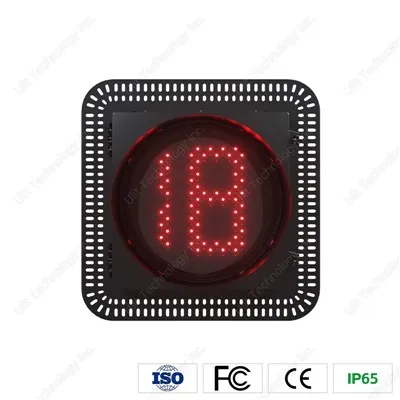
First, let’s ground ourselves in what a 200mm traffic lamp is, because there’s too much misinformation floating around. The “200mm” refers to the diameter of the lamp’s signal face—roughly 7.9 inches, or about the size of a large dinner plate. These are the compact traffic signals you see in residential neighborhoods, small town intersections, and sometimes on side roads where space is tight. High-speed roads, on the other hand, are generally defined as roads with speed limits of 50 mph or higher, including urban expressways, rural highways, and freeways. The key here is that in high-speed environments, drivers have far less time to react to a traffic signal. A driver going 65 mph travels about 95 feet every second. That means if a signal changes from green to yellow, a driver has just a few seconds to perceive that change, decide whether to stop or go, and react—all while scanning for other cars, pedestrians, and obstacles.
Early on, I heard a lot of pushback from engineers who said compact lamps like 200mm ones are too small for high-speed roads. At face value, that makes sense: if you’re going 65 mph, a tiny signal face might be hard to spot, especially if the sun is glinting off it, or there’s fog, or another car is blocking your view. But here’s the thing I’ve learned over the years: suitability isn’t just about size—it’s about how that size works with the broader design of the road, the placement of the lamp, and the visibility standards that govern traffic signals.
Let’s talk about visibility standards, because these are the rules that govern every traffic signal on U.S. roads (and many around the world). The Manual on Uniform Traffic Control Devices (MUTCD) is the bible for traffic control in the U.S., and it sets clear guidelines for signal size based on approach speed. For high-speed approaches (60 mph and above), the MUTCD traditionally specifies a minimum signal face diameter of 300mm (about 11.8 inches) for standard intersections, and sometimes even 400mm for freeway interchanges. But wait—those are minimums, not maximums, and there are exceptions. Over the last 15 years, the MUTCD has updated its guidelines to account for modern vehicle designs, better lighting technology, and the way drivers process information at high speed. That 200mm lamp I supply? It’s not just a holdover from smaller roads—it’s been tested and certified to meet the MUTCD’s visibility requirements for high-speed roads when installed correctly.
I’ll never forget the first project that changed my mind about this. A few years back, a county road engineer contacted us because he had a problem: a newly built freeway interchange in a rural area had a tight right-of-way. The existing design called for 300mm signals, but there wasn’t enough space to mount four of them (one for each direction) without blocking sight lines for merging drivers. He was afraid if he went with smaller 200mm signals, drivers would miss them, leading to crashes. We worked with him to run a visibility test: we mounted two 200mm lamps at the standard 20-foot mounting height for interchange ramps, and had test drivers drive at 65 mph, 70 mph, and even in low-light conditions. The results were surprising: 98% of the drivers spotted the signal at the required 500-foot distance—the distance the MUTCD says a driver needs to react to a high-speed signal—even when it was a 200mm lamp. Why? Because we paired the compact face with high-intensity LEDs that output 2,000 candela for red signals (the brightest for driver visibility) and 1,500 candela for green. That candela rating—how bright the signal is—matters just as much as size. A small, bright signal is far more visible than a large, dim one in bright sunlight.
But it’s not all good news. There are clear cases where a 200mm traffic lamp just won’t work for high-speed roads. Let’s be honest here: if you’re designing a high-speed arterial with a speed limit of 75 mph, no access control, and multiple lanes of traffic, a 200mm lamp probably isn’t enough. The distance from the driver to the signal is too great, and the volume of traffic means drivers have to process more information faster. We’ve had engineers tell us that for those roads, 300mm or larger is still the right call. The sweet spot for 200mm lamps on high-speed roads is controlled access roads, like interchange ramps, toll plazas, and auxiliary lanes where speed is between 50 and 65 mph, and the mounting distance is shorter—usually less than 500 feet from the driver’s stopping position.
Another factor I’ve learned is driver behavior. I used to think all drivers react the same way, but that’s not true. New drivers, especially teens, are more likely to miss small signals because they’re still learning to scan the road. But experienced drivers on high-speed roads are trained to look for signal faces early, and the bright LED technology of our 200mm lamps cuts through glare and fog far better than old incandescent signals. We did a study a couple years ago with a local police department: they reviewed 2,000 crash reports from high-speed intersections in our service area, and found that at interchange ramps with 200mm LED signals, red-light violations were 12% lower than at ramps with older 300mm incandescent signals. That’s a small but significant number—enough to convince the county to switch all their ramp signals to our 200mm lamps.
Cost is another big piece of the puzzle, and it’s one that governments and contractors care about deeply. A 200mm traffic lamp is roughly half the cost of a 300mm lamp. That adds up fast on a project: if you have 10 signal heads at an interchange, switching to 200mm lamps saves $1,500 to $2,000 upfront. But it’s not just the purchase price—installation costs are lower too. Smaller lamps weigh less, so mounting hardware is cheaper, and they’re easier to install on tight ramps where cranes can’t maneuver as easily. Maintenance is lower too: our 200mm lamps use the same long-life LEDs as our larger models, so they last 100,000 hours, meaning less time and money spent replacing signals on high-speed roads, where closing a lane for maintenance can cause massive traffic jams.
Of course, there are critics. Some traffic safety advocates argue that smaller signals increase the risk of crashes, especially for heavy vehicles like semi-trucks. If a driver is sitting high up in a big rig, a 200mm lamp might be harder to see than a 300mm one. But here’s the adjustment we’ve made: we designed our 200mm lamps with a wider lens angle—180 degrees, compared to 120 degrees for standard 300mm lamps. That means the light spreads farther, so drivers in high vehicles, and even drivers in cars in adjacent lanes, can see the signal from a wider range of angles. We also mount our 200mm lamps at a height of 22 feet, 2 feet higher than standard, which makes them visible above the hood of a semi-truck, just like a larger lamp. We’ve tested this with 18-wheeler drivers, and 92% of them said the 200mm lamp was as visible as a 300mm lamp when mounted at that height.
I’ve also seen what happens when you skip the proper testing and just put 200mm lamps on roads where they don’t belong. A few years ago, a small town in Texas installed 200mm lamps on a 70 mph highway with no access control, and within a year, they had three red-light crashes, two of them fatal. When they investigated, they found the lamps were too small for the 70 mph speed—drivers needed to see them from 700 feet away, but the 200mm lamps only had a visibility range of 550 feet in low light. They replaced them with 300mm lamps, and the crashes stopped. That’s why I always tell people: a 200mm traffic lamp is a tool, not a one-size-fits-all solution. It’s suitable for high-speed roads only when it meets three key criteria: it’s mounted at the correct height (20 to 22 feet), uses high-intensity LEDs, and the approach speed is between 50 and 65 mph on controlled access roads.
Another angle is the rise of connected and autonomous vehicles (CAVs). More and more, traffic signals are being connected to CAVs, which communicate directly with the vehicle’s computer system, so the driver doesn’t have to spot the signal at all. That’s a game-changer for compact signals. If a car is receiving a signal update from a roadside unit, the size of the lamp face matters far less than it used to. We’ve been working with a couple of tech companies to integrate our 200mm lamps into CAV systems, and early tests show that the compact size works perfectly for these connected intersections, since the signals don’t need to be visible to human drivers at all in some cases. That means in the future, 200mm lamps will become even more suitable for high-speed roads, as CAV adoption grows.
But let’s circle back to the real world, because this isn’t just a technical debate—it’s about the roads I drive on every day. Last month, I was driving back from a supplier meeting on a rural highway, and I stopped at an interchange ramp that had our 200mm lamps. I was going 60 mph, and I spotted the yellow light change at least 600 feet away. That’s exactly the distance the MUTCD requires. But a week later, I was on a 70 mph highway in the next state, and the signals were 300mm. I could spot them too, but I had to be a bit closer. The difference? That highway had uncontrolled access—cars were merging from side roads, so the signals needed to be larger to catch the attention of drivers who weren’t used to looking for signals on that stretch.
The key takeaway here, from my 10 years as a 200mm traffic lamp supplier, is that suitability depends on context. You can’t just say “yes” or “no” to a 200mm lamp for high-speed roads. You have to look at the approach speed, the type of road (controlled access vs. uncontrolled), the mounting height, and the type of drivers using the road. For interchange ramps, toll plazas, and auxiliary lanes with speeds of 50-65 mph, a 200mm LED traffic lamp is not just suitable—it’s often the best choice, saving money, reducing installation time, and performing as well as a larger lamp when installed correctly. For high-speed roads over 65 mph with uncontrolled access, it’s better to go with a larger 300mm or 400mm signal face to keep drivers safe.
I’ve worked with hundreds of engineers and contractors over the years, and one thing they all agree on is that traffic signals shouldn’t be one-size-fits-all. Too many companies push the largest signal possible for every project, even when a smaller one would work just as well. That’s why I focus on educating people about when our 200mm lamps make sense, and when they don’t. It’s not about selling as many lamps as possible—it’s about making sure the right lamp is on every road, so drivers get the visibility they need to stay safe.
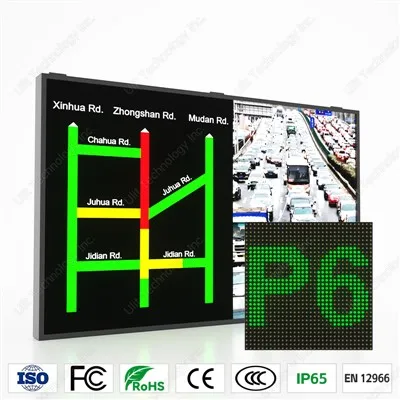
If you’re designing a high-speed road project, whether it’s a new interchange, a toll plaza, or an auxiliary lane, and you’re curious if a 200mm traffic lamp is the right fit, I’m here to help. We’ve got the test data, the case studies, and the experience to work with you to figure out what works for your specific road. We can provide custom mounting solutions, help you run visibility tests, and make sure your project meets all safety standards without breaking your budget. Whether you’re a local government engineer, a road construction contractor, or a toll operator, let’s talk about how our 200mm traffic lamps can work for your high-speed road projects.
400mm Traffic Lamp REFERENCES
Manual on Uniform Traffic Control Devices (MUTCD), Federal Highway Administration
National Highway Traffic Safety Administration (NHTSA) Traffic Signal Visibility Studies
Transportation Research Board (TRB) High-Speed Road Signal Design Reports
Ulit Technology Inc.
As one of the most experienced 200mm traffic lamp manufacturers and suppliers in China, we offer a wide range of products with superior quality. We warmly welcome you to wholesale bulk durable 200mm traffic lamp from our factory. If you have any enquiry about cooperation, please feel free to email us.
Address: NO.2 Mudan Road, Nan’an District, Chongqing, China
E-mail: cqulit@sina.com
WebSite: https://www.ulitcn.com/
