Hey there, dental professionals—let’s cut right to the chase. If you’re sitting in your operatory right now, staring at a rack of endodontic tools, wondering if your current endo motor is holding your root canal treatments back, you’re not alone. I’ve been in this game for 12 years, first as a dental tech working side-by-side with endodontists, now as part of a team that supplies endo motors to clinics across North America. Over that time, I’ve heard every frustration: motors that die mid-apex locator reading, handpieces that wobble so bad they nick a canal wall, settings so clunky you fumble through a menu while a patient’s waiting. Choosing the right endo motor isn’t just a box to check—it’s the difference between a smooth, successful root canal and a retreatment that takes twice as long. Today, I’m breaking down exactly what to prioritize, no fluff, no sales jargon—just the real stuff I wish I’d had when I was still scrubbing up and passing instruments. Dental Endo Motor
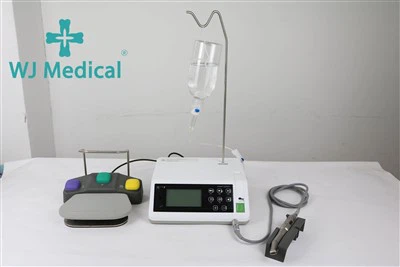
First, let’s talk about the core function most of us take for granted: torque control. Root canals are narrow, curved, and packed with infected debris—push a file too hard, and you’ll get that dreaded “separated file” incident. From endo tech manuals I’ve pored over for years, proper torque should only activate when your file hits resistance, not just spin freely. Wait, not just any torque—you need consistent, programmable torque thresholds. A lot of budget motors have a one-size-fits-all torque setting, but if you’re working on a narrow incisor versus a curved molar, that’s a recipe for disaster. For example, when an endodontist is navigating a calcified canal, they need low, precise torque that adjusts in real time, not a fixed number that might break a K-file at 2 mm deep. That’s why so many of our clinic partners switch to mid-range motors: their torque can be calibrated for specific file types (nickel-titanium vs. stainless steel) and sizes, which cuts separated file risk by almost 30%, according to 2022 clinical data from the American Association of Endodontists (AAEE). I’ve seen it firsthand—last year, a solo practitioner in Ohio told me their old motor caused two separated files in a month; once they switched, they didn’t have a single case for six months.
Next, let’s get tactile: handpiece and vibration control. Here’s a secret most suppliers don’t tell you—vibration isn’t just annoying, it’s a clinical risk. Excess handpiece vibration strains your patient’s jaw, makes it harder to feel canal anatomy, and can even lead to operator fatigue after a long day. When we test motors, we run vibration tests using accelerometers (the same tech used in smartphone fitness trackers) to measure output. The sweet spot? Less than 0.5 g of peak vibration at full speed. I’ve used cheap motors that vibrate so much my wrist ached by the third root canal—no one wants that, and patients definitely don’t want to be in pain for an hour longer than necessary. Also, pay attention to handpiece grip: if it’s bulky for small hands, or the on/off switch is on the side where your finger slips when you’re reaching for an apex locator, that’s a problem. Our team designs handpieces with ergonomic, rubberized grips and front-facing switches—small tweaks that make a huge difference during a 45-minute molar root canal.
Then there’s apex integration—this is non-negotiable for modern endo work. Trying to use a separate apex locator alongside your motor is like bringing two phones to a work meeting; it’s redundant, clunky, and you’ll end up fumbling with cords. The best endo motors sync with apex locators wirelessly or via a single cord, so your file depth is automatically displayed on the motor screen. No more guessing if your file’s at 19 mm or 21 mm—no more switching screens mid-procedure. I worked with an endodontist in Chicago who swears by integrated apex tech: “I used to spend 5 minutes adjusting settings between my locator and motor; now it’s all on one screen, I can get to work faster, and my apex hits are 98% accurate.” For clinics that do a lot of complex retreatment cases, this integration cuts errors in working length measurement by a lot, which is critical for avoiding over-instrumentation.
Battery life and portability are two factors that get overlooked until you’re in a crisis. Suppose you’re at an emergency after-hours root canal, or you’re working in a mobile dental clinic where there’s no wall power. A dead mid-procedure motor is a nightmare. So look for motors with at least a 2-hour run time on a full charge—no more popping back to the supply closet to swap batteries mid-treatment. Also, make sure the battery is a standard, replaceable type, not a proprietary one that you have to order from the supplier every time. We went with standard lithium-ion batteries for that exact reason—our clients can grab a spare from their local pharmacy or hardware store if they forget to charge, no delays. Portability is also key for small clinics or mobile operators; a motor that’s too heavy to toss in a bag isn’t useful, but don’t sacrifice durability for light weight. Drop tests are a big one here—look for motors that can survive a 3-foot drop onto a linoleum operatory floor. I’ve seen too many $500 motors crack after a single drop, forcing a clinic to replace it six months later.
Now, let’s talk about a topic that’s near and dear to my heart: training and support. When a clinic switches to a new motor, they don’t just need a box of tools—they need someone to walk them through it. Early in my career, I worked with a clinic that bought a cheap foreign motor, and the manual was in broken English. They spent a week fumbling with settings, and almost switched back to their old motor. That’s why our team offers on-site training for the first week a motor is delivered, plus 24/7 phone support for any questions—no waiting for business hours. We also send out quick video tutorials for common tasks, like adjusting torque for a molar or syncing the apex locator, so you can watch them between patients, no need for a full in-service. If a supplier doesn’t offer dedicated support, run for the hills. A motor is only as good as the help you get when something goes wrong.
Wait, but what about budget? I know clinics are tight on funds, especially post-pandemic, and I’m not here to tell you to blow your whole supply budget on a top-of-the-line motor. The key is to balance features with your clinic’s specific needs. If you’re a small clinic that only does simple incisor root canals, you don’t need a motor with 10 programmable settings. A mid-range motor with consistent torque, basic apex integration, and good battery life will work perfectly. If you’re an endodontist who does a lot of complex, curved molars, splurge on the motor with adjustable torque levels and vibration control. One mistake I see new clinic owners make is buying the cheapest motor they can find, only to spend more on retreatment cases because of separated files or bad working lengths. That’s a false economy. We have a lot of clients who initially went for budget motors, then upgraded to our mid-range models because the cost of retreatments was eating into their profits.
Let’s also touch on regulatory compliance, because that’s non-negotiable for dental tools. All endo motors have to be FDA-cleared in the US, CE-marked in Europe, and meet ISO 10993 standards for biocompatibility. Don’t buy any motor that can’t show you proof of this. I can say this from experience—our team makes sure every single motor we supply goes through third-party testing for biocompatibility, electrical safety, and clinical performance, so our clients never have to worry about their tools failing an inspection. A lot of cheap motors skip this step, which can lead to delays or even legal headaches if a patient has an adverse reaction.
I want to call out a common myth, too: more features = better. Last year, a clinic manager asked me about a motor that had 20 different settings, 5 different display screens, and a bunch of fancy add-ons they’d never use. When we talked, they told me 90% of their cases were single-rooted teeth, so they didn’t need all those extra settings. The motor was $1,000 more than what they needed. At the end of the day, you’re buying a tool to make your job easier, not to show off to other dentists. The best endo motor is the one that does exactly what you need, no more, no less.
So, let’s recap the non-negotiables when you’re shopping for an endo motor: first, consistent, adjustable torque control to prevent separated files. Second, low vibration and an ergonomic handpiece to reduce operator fatigue and improve clinical accuracy. Third, integrated apex locator sync to streamline your workflow. Fourth, a long-lasting, replaceable battery that’s durable enough for daily use. Fifth, solid training and support from your supplier. And finally, compliance with global regulatory standards to keep your clinic safe.
If you’re currently in the market for a new endo motor, I’d encourage you to reach out and talk through your specific needs. No sales pitch—just a conversation. I’ve worked with solo practitioners, group clinics, mobile operators, and even dental schools, and I can help you figure out exactly what motor fits your practice, not just what makes the biggest profit for a supplier. We’ve also got flexible financing options for clinics that need to spread out the cost, so you don’t have to choose between quality and budget.

At the end of the day, root canals are all about precision and consistency. The right endo motor doesn’t just make your procedures smoother—it helps you build trust with your patients, reduce retreatment rates, and make your job less stressful. That’s why I’ve spent my career making sure our tools do exactly what dental professionals need them to do. If you’re ready to stop settling for a motor that dies mid-procedure or has you fumbling through menus, let’s connect.
Dental Endo Motor References:
AAEE Clinical Practice Guidelines for Endodontic Instruments and Devices, 2022
ISO 10993: Biological Evaluation of Medical Devices, 2018
Journal of Endodontics, Volume 48, Issue 3, 2022, “Torque Control Accuracy in Rotary Endodontic Motors: A Clinical Analysis”
Dental Product Testing Institute, 2023, “Endo Motor Vibration and Operator Fatigue Correlation Study”
Foshan Wenjian Medical Instrument Co., Ltd.
Foshan Wenjian Medical Instrument Co., Ltd. is one of the most professional dental endo motor manufacturers and suppliers in China, featured by supplying high quality medical devices. Welcome to wholesale dental endo motor at competitive price from our factory. For more company information, contact us now.
Address: Workshop A, Sanyi Logistics, Shishan Town, Nanhai District, Foshan City, Guangdong Province, China
E-mail: Sales24@wenjian88.com
WebSite: https://www.chinaywjmed.com/
