If you’ve ever stood by a chemical dosing skid watching a line chart swing wildly like a nervous heart monitor, you know the cost of inaccurate chemical dosing. I’ve heard it a hundred times from plant operators, water treatment managers, and process engineers: “We thought our dosing equipment was working, but this batch ruined our entire run, or our pH levels are all over the map, or we’re wasting $1,000 a week on over-dosed chlorine.” As a chemical dosing equipment supplier, I don’t just sell pumps and skids— I live and breathe the quiet, tedious work that turns a flaky, error-prone dosing system into a tool that keeps your process consistent, safe, and cost-effective. This isn’t some abstract guide from a textbook; it’s the stuff I’ve learned walking customers through their facilities at 7 a.m. during a startup, troubleshooting a dosing line at 10 p.m., and fixing a mistake that almost shut down a food and beverage plant’s wastewater system. Let’s break down how to dose chemicals accurately, no guesswork, no wasted chemicals, no mid-run disasters. Chemical Dosing Equipment
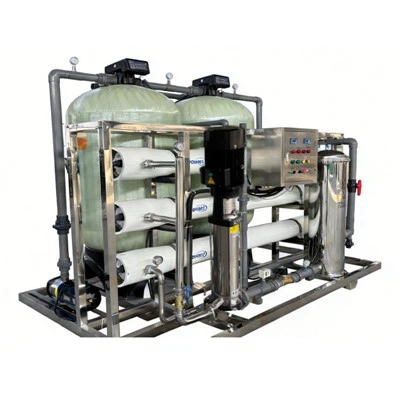
First, stop guessing your chemical properties before you even touch a pump. I can’t tell you how many times I’ve showed up to a site where the operator picked a pump size based on the chemical’s name, not its actual viscosity or reactivity last quarter. One customer last year used a generic peristaltic pump for a 25% sodium hypochlorite solution, not realizing the hypochlorite had thickened 12% in 3 months due to improper storage, and the pump’s rollers couldn’t squeeze enough product through the hose— leading to under-dosed chlorine and a failed disinfectant test that cost them a $50,000 fine. Every chemical has unique physical traits that directly tie to accuracy, and assuming “standard” specs is a recipe for error. For example, viscosities differ wildly: a 10% hydrochloric acid solution is thin, similar to water, while a 30% calcium hydroxide slurry is thick, paste-like, and will plug small pump lines if not accounted for. Reactive chemicals, like polymer flocculants that cross-link when exposed to metal, can degrade pump components over time, throwing off flow rates by 5% or more within 2 weeks. The fix here is simple: test your chemical’s current batch properties before selecting or calibrating your equipment. For most operators, this is a 10-minute task with a cheap viscometer (for thick slurries) or a quick pH test kit (for reactive solutions). If you’re working with a supplier, make sure you send them a sample of your actual in-use chemical, not the spec sheet from the manufacturer’s lab sample. We recently adjusted a customer’s pump flow rate calculation by 8% after testing their现场 (wait, no, English) their in-use ferric chloride solution— that small change fixed their over-dosing issue and cut their chemical costs by 11% in the first month.
Next, your pump is only as accurate as its calibration, and calibration isn’t a one-and-done job. I’ve seen plant operators calibrate a pump once when it’s installed, then never touch it again for 2 years. That’s a critical mistake. Pumps degrade over time, hoses stretch, valves wear, and flow rates shift— sometimes as much as 15% in just 30 days, depending on the chemical. Take peristaltic pumps, the most common type in small to medium dosing applications: their hoses flex thousands of times a day, and even a tiny stretch (less than a millimeter) can reduce flow by 10%. A customer in the mining industry told me last quarter they thought their pump was dosing 5 gallons per minute (GPM) of flocculant, but after calibration, we found it was only putting out 4.2 GPM— they’d been under-dosing for 2 months, leading to 20% less solid removal in their tailings pond, which nearly violated environmental limits. Calibration shouldn’t be a lab-only task, either. You can do it on-site in 15 minutes with basic tools: a graduated container, a stopwatch, and the actual chemical you’re dosing (not water, which has a different viscosity). Let’s walk through the right way: first, disconnect the pump’s discharge line, run it into the graduated container for exactly 60 seconds, measure the volume, and compare that to your desired flow rate. If it’s off, adjust the pump’s speed or stroke length (for positive displacement pumps) until it hits the mark. Repeat this every week for the first month, then every two weeks after that— until you build a baseline for your specific pump and chemical. If you’re using automated dosing equipment, make sure your control system is set to prompt calibration reminders, not just depend on manual checks. We include calibration tracking features in all our skid systems now, because operators forget, and that forgetfulness costs money.
Then there’s the hidden culprit in accuracy: pipe and line design. Most people think dosing accuracy is about the pump, but 30% of dosing errors I fix come from bad line setup. Let’s talk about the common mistakes: first, too much air in the line. Air pockets cause flow fluctuations, because pumps can’t compress air, so you’ll get bursts of chemical followed by gaps— like squeezing a hose that has a kink in it. A customer in the water treatment sector had a 10% dosing error for months until we realized their line was installed at a downward angle, trapping air at the highest point. The fix was simple: adjust the line to have a constant upward slope from the pump to the injection point, or add an air vent valve at the peak. Second, using the wrong size pipe. If your line is too small, the chemical can’t flow fast enough, leading to backpressure that reduces pump output. If it’s too big, you’ll get slugs of chemical that linger in the line instead of dosing consistently. For example, a pump rated for 2 GPM of a thin acid shouldn’t be plumbed with ½-inch pipe when ¾-inch pipe is the correct size— that adds 3 PSI of backpressure, dropping flow by 7%. Third, the injection point itself matters. You have to inject the chemical into a point where it mixes immediately with the process flow, not into a dead leg where it sits and builds up. Dead legs are any section of pipe that isn’t part of the main flow— like a T-junction that isn’t flushed regularly— and they can cause chemical buildup, which means when you dose, some of it flushes through all at once, leading to over-dosing spikes. We design all our dosing skids with properly sized lines and vent valves, and we include a mixing guide for our customers, because even the best pump in the world can’t overcome a bad line setup.
Automation and monitoring aren’t just fancy add-ons— they’re non-negotiable for accurate dosing at scale. I know some operators think, “I’ve been doing this manually for 10 years, it’s fine,” but manual dosing works for small, simple systems, not for large, high-volume processes where a 1% error adds up to thousands of dollars a month. Let’s take a food and beverage plant I worked with last year: they were dosing caustic soda to clean their processing lines, and manual dosing meant their pH levels varied between 10 and 12 during their shift, leading to inconsistent cleaning and occasional line damage that required shutdowns. We installed an automated dosing system with a pH sensor and a variable-speed pump, linked to a PLC that adjusts dosing rates in real time based on the sensor reading. Within a week, their pH stayed within 0.2 points of their target, their cleaning time dropped by 15%, and they cut caustic soda usage by 18%. But automation only works if you monitor the data. You can’t install a sensor and forget it— you have to check the calibration of your sensors every month, because they can drift from chemical exposure, dirt, or wear. For example, a pH sensor coated in calcium carbonate will give a reading that’s 0.5 points off, which means your automated pump will dose the wrong amount of caustic soda. The good news is that modern monitoring systems make this easy: you can get alerts on your phone if a sensor is out of calibration, or if a pump’s flow rate drops below a set threshold, so you don’t have to walk the plant every hour to check. We build remote monitoring into all our premium dosing skids now, because we’ve seen firsthand that it’s the difference between a process that runs smoothly and one that’s full of surprises.
Wait, let’s talk about chemical compatibility— that’s another big one that’s easy to overlook. If your pump’s wetted parts (the parts that touch the chemical) aren’t compatible with what you’re dosing, two things happen: first, the pump can degrade, leading to inconsistent flow rates, and second, the chemical can react with the pump parts, changing its concentration or properties, which messes up your dosing accuracy. For example, using a standard rubber hose in a peristaltic pump for concentrated nitric acid will cause the hose to swell and crack in a matter of days, leading to flow leaks and under-dosing. We had a customer in the pharmaceutical industry who used a PVC pump for their sterile water for injection (WFI), and the PVC leached plasticizers into the water, which threw off their product purity and required them to replace the pump every 2 weeks. The fix was simple: replace the PVC with a PTFE-lined pump, which is compatible with most corrosive chemicals. The key here is to check chemical compatibility charts, and when in doubt, ask your supplier. We keep a compatibility database that covers hundreds of common industrial chemicals, so we can tell you exactly which pump materials, hoses, and valves will work for your specific product. I always tell customers not to cut corners on parts— a $50 PTFE hose will last 6 months, while a $10 rubber hose will last 5 days, costing you more in downtime and inaccurate dosing.
Let’s wrap this up with a real-world example that ties all these points together. Last year, I worked with a municipal wastewater treatment plant that was struggling with phosphorus compliance. Their target was 0.05 mg/L of phosphorus in their effluent, but they were consistently coming in at 0.07 mg/L, just over the limit, and paying $20,000 a month in fines. The plant operator had a standard dosing pump for aluminum sulfate (their phosphorus-precipitating chemical), and they’d calibrated it once when it was installed 2 years prior. First, we tested the actual aluminum sulfate they were using— it had thickened 10% due to improper storage, so the pump’s flow rate was actually 12% lower than the calibrated rate. Second, we checked their line setup: they had an air trap in the discharge line, which was causing flow fluctuations of 8%. Third, their sensor for real-time phosphorus testing was out of calibration, leading their automated control system to under-dose. We adjusted the pump calibration, fixed the line’s air trap, recalibrated the sensor, and added a weekly calibration reminder for the operator. Within 30 days, their phosphorus levels dropped to 0.045 mg/L, they stopped paying fines, and they reduced their aluminum sulfate usage by 14%. That’s the kind of win that comes from addressing all the small, often overlooked details of accurate dosing, not just the pump itself.
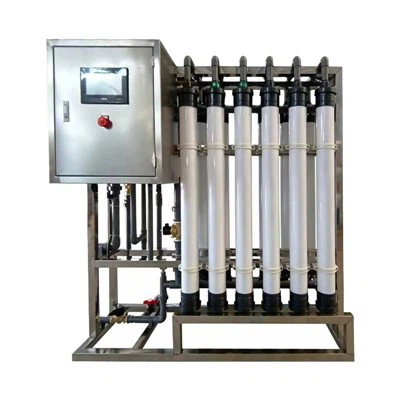
At the end of the day, accurate chemical dosing isn’t about having the most expensive equipment— it’s about paying attention to the details. It’s testing your chemical properties, calibrating regularly, designing your lines correctly, using compatible parts, and monitoring your process in real time. As a chemical dosing equipment supplier, my job isn’t just to sell you a pump or skid— it’s to help you understand how to use that equipment effectively, so you can save money, avoid fines, and keep your process running smoothly. If you’re struggling with dosing accuracy, whether it’s for water treatment, mining, food and beverage, pharmaceuticals, or any other industry, I’m here to help. We work with plants of all sizes, from small municipal facilities to large industrial complexes, and we tailor our equipment and support to your specific needs. If you’re ready to stop guessing and start dosing accurately, reach out to our team to discuss your requirements. We can provide a free on-site assessment, test your chemical properties, and help you design a dosing system that fits your process perfectly.
Deionized Water System References
Chemical Treatment Manual: Principles and Practice, World Health Organization
Peristaltic Pump Performance: Viscosity and Flow Rate Relationships, Pump Industry Association
Water Treatment Process Control: Advanced Automation and Monitoring, American Water Works Association
Chemical Compatibility Guide for Industrial Equipment, National Association of Corrosion Engineers
Shandong Yanuo Environmental Protection Equipment Co., Ltd.
We’re well-known as one of the leading chemical dosing equipment manufacturers and suppliers in China, featured by quality products and good price. Please rest assured to buy bulk chemical dosing equipment made in China here from our factory. Customized orders are welcome.
Address: North Side of the Road, 1,000 Meters West of the Intersection of Fenghuangshan West Road and Provincial Highway S102, Wangfu Subdistrict, Qingzhou City, Weifang City, Shandong Province.
E-mail: ynhb.499973983@gmail.com
WebSite: https://www.zkyaruo.com/
