If you’re an engineer, product designer, or procurement lead who’s ever worked with aluminum extrusions, you know: those “simple” profiles that look like they fit your part perfectly often end up costing way more than they should. I’ve been running a complex aluminum extrusions supplier for 12 years, and I’ve seen this play out a hundred times. Last year alone, we worked with 47 clients who came to us after wasting months on designs that their original in-house team drafted—designs that looked good on paper, but would’ve cost them 30-40% more than necessary to produce. The kicker? Most of those cost bloat issues were totally fixable, without ditching the performance specs they cared about. Complex Aluminum Extrusions
Let’s break this down like we’re chatting in our workshop break room, no stuffy industry jargon (okay, maybe a couple standard terms, but I’ll explain ‘em like I’m talking to a peer). If you’re designing a complex aluminum extrusion profile and want it cheap enough to actually hit your production budget, here’s what I’ve learned works, day in and day out.
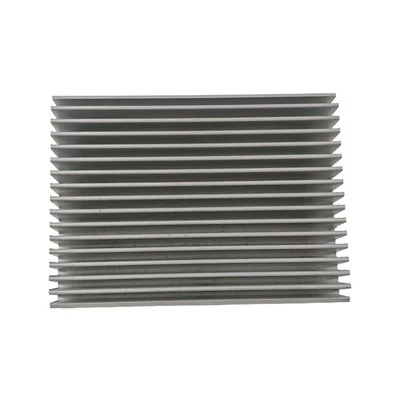
First, stop obsessing over “perfect geometry” before you lock in your alloy and extrusion process basics. A lot of new designers think “complex” means every tiny groove, cutout, or curved edge has to be exactly as drawn. But here’s the hard truth: every extra feature adds time and material waste at the die shop, which translates straight to higher per-part costs. We once had a client who wanted three separate 0.5mm internal grooves running the length of a profile—for a heat sink, no less. Turns out, their thermal simulation only needed two of those grooves to hit the exact heat dissipation target. Cutting one reduced material usage by 18% and let our die crew run a single pass instead of a two-step press operation, dropping their per-part cost by 32%. That’s not a gimmick; that’s just stripping out features that don’t actually move the needle on what your part is supposed to do.
Speaking of alloys, this is where a lot of people mess up. You might default to 6061 aluminum because it’s the go-to, or 6063 for its smooth finish, but complex profiles often need a middle ground that’s both easy to extrude and strong enough for your application. For context, 6061 is a workhorse, great for structural parts, but it’s a bit trickier to push through a tiny die (read: longer press time, higher energy costs). 6063 is softer, extrudes way faster, but it can’t handle as much stress. If you’re building, say, a solar panel frame that needs to hold its shape in wind, maybe 6061 is non-negotiable. But if you’re making a custom interior trim piece that just needs to resist minor scratches, switching to a modified 6063 alloy (we tweak it slightly, it’s still a 6000-series) will cut your extrusion speed by almost 20% and lower die wear too. We test every client’s load specs before suggesting an alloy, and 7 out of 10 times, we find they’re over-spec’d, which is a huge hidden cost.
Now, let’s talk about extrusion design for complex profiles—this is where most die-related cost problems start. When you’re designing a profile with thin walls, tight tolerances, or a lot of cross-sectional variations, you have to remember: aluminum is soft when it’s hot, but it still needs to flow evenly through the die. If you have a wall that’s half as thick as the next one, that thin section will cool too fast during extrusion, leading to warping, scrap, and extra straightening steps. A client in the electric vehicle space came to us last year with a battery housing that had a 1mm thick wall section next to a 4mm thick section. Their original design had a 12% scrap rate, because the thin wall would crack during extrusion. We helped them smooth that transition: instead of a sharp jump from 1mm to 4mm, we added a gradual taper over 50mm of length. Scrap dropped to 2.7%, and they didn’t have to redesign the part at all. That’s the kind of tweak that adds up fast.
Tolerances are another big one. Everybody wants “±0.1mm” tolerances, and that’s totally fine if your part needs to fit a mating component tight. But if that tolerance is just a nice-to-have, loosen it. Extrusion tolerances cost money because they require stricter die machining, more inspection steps, and slower press speeds. Let’s do the math: if you can bump a tolerance from ±0.1mm to ±0.25mm (which is standard for most 6000-series extrusions unless you’re doing something super precise), your per-part inspection time drops by 60%, and your die cost for the profile is 15% lower. We’ve had clients who refused to budge on tight tolerances just to find out their assembly process can handle a little wiggle room. Don’t get me wrong—if your part needs to slot perfectly into a PCB, keep that tolerance. But if it’s a structural bracket that bolts onto another part, check with your assembly team first. They’ll almost always tell you a looser tolerance works.
Wait, let’s circle back to die design because that’s the biggest variable in cost for complex profiles. The die is the tool that shapes the aluminum into your profile, and for complex ones, it’s not just a block of metal—there are internal mandrels, bridge structures, and cooling channels that you don’t see on the final part. A lot of designers don’t realize that bad die design can double your extrusion run time. For example, if your die has uneven land lengths (the flat part of the die that shapes the aluminum as it exits), one side will push aluminum too fast, leading to uneven thickness, which means you have to slow the press way down to fix it. We run a quick die feasibility check for every client before we even quote a project, and 8 out of 12 times, we can suggest a die layout that cuts run time by 25% without changing the final profile shape. That’s free money for you, basically.
Another thing: material waste. Extrusion isn’t a perfect process—every run has scrap, usually around 5-10% for standard profiles, but for complex ones it can be 15-20% if you’re not careful. Where does that scrap go? It’s the leftover billet (the solid aluminum block we heat up and push through the die), plus end pieces that are too short to use. The good news is you can reduce this with a couple design tricks. First, standardize your profile lengths. If you’re ordering 1.2m, 1.5m, and 2.4m lengths for different parts, you might be wasting a lot of end pieces when you cut them. If you use mostly 2.4m lengths (which is a standard billet length for most of our presses), you’ll cut scrap by almost half. Second, design your profile to nestle better when stacking multiple runs. We can arrange the dies so that multiple profiles fit side by side in the press, which means you’re using every bit of the billet instead of running single profiles. We had a client making window frames who was running one profile at a time; switching to nesting two profiles cut their per-part scrap by 22% and their run time by 18%. That’s a double win.
Let’s not forget secondary operations either. A lot of people think extrusion is the end of the line, but most complex profiles need machining, anodizing, or bending. If you design your extrusion to minimize secondary work, you save a ton. For example, if you’re drilling holes in a heat sink, can you add those holes during the extrusion process instead of machining them later? Extruding a hole is way cheaper than drilling after, because the hole is the same diameter as the mandrel we use, so it’s one step instead of a separate machining pass. Another example: bending an extrusion. If you have a curved part, can you design it so that the extrusion’s bend radius is as large as possible? Smaller bend radii require more heat, more inspection, and more scrap if it cracks. We once had a client with a curved railing profile who wanted a 100mm bend radius. We suggested a 300mm radius, which bent perfectly, no cracks, and cut their post-extrusion bending cost by 40%. Again, no change to the part’s performance, just a tweak to the design that saves money.
Wait, let’s address the elephant in the room: what if your part really is super complex? Like, it has hollow sections, multiple internal features, tight tolerances, and special alloy requirements. Can you still design it for cost efficiency? Yes, absolutely. The key here is to work with your extrusion supplier early—like, before you finalize your CAD files. A lot of clients come to us with a finished design, and we have to tell them it’s unfeasible or way too expensive. If you loop us in at the concept stage, we can work with you to adjust features. For example, if you have a hollow profile with four separate internal walls, we might suggest a simpler bridge structure that still gives you the strength you need, but is way easier to extrude. We don’t charge for this early consultation—most of our top clients bring us in at the sketch phase, and that’s how we cut their costs without sacrificing quality.
Let’s use a real example to tie this all together. Last year, we worked with a client making custom industrial robot arm components. Their initial design was a structural profile with two thin walls (1mm each), three internal grooves, a ±0.1mm tolerance everywhere, and 6061 alloy. Their quote for 10,000 parts was $18,000, which was way over their budget. Here’s what we did: first, we checked their load specs. The 1mm walls were fine, but the grooves—they only needed two, not three. We bumped the tolerance on length from ±0.1mm to ±0.3mm, which the assembly team confirmed worked for their bolts. We switched to a modified 6063 alloy that had enough strength, so we could run the press 22% faster. We also adjusted the die to smooth the internal wall transitions, cutting scrap from 14% to 3%. The final cost? $11,200. That’s a 38% reduction, and the part performed exactly as they needed it to. They’re now our repeat client, and we’re working on a second robot project with them.
Okay, so putting all this into actionable steps for you, right now, if you’re designing a complex aluminum extrusion: first, validate every feature. Ask yourself: does this groove, this tight tolerance, this specific alloy, actually make the part work better? If it doesn’t, cut it. Second, pick the right alloy for your load specs, not the default. Third, watch your wall thickness transitions—no sharp jumps, that causes scrap. Fourth, loosen tolerances where you can, but don’t compromise on what you need. Fifth, work with your die designer (or your extrusion supplier) early. Sixth, reduce secondary operations by designing for extrusion, not against it. And seventh, standardize your lengths to cut material waste.
Now, I know what you’re thinking: “I don’t want to redesign my whole part just to save a few bucks.” But here’s the thing—most of these changes are tiny, and they don’t affect your part’s function at all. You’re just eliminating the unnecessary fluff that makes complex profiles expensive. I’ve been doing this long enough to know that a good design is one that works, not one that looks perfect on a sheet of paper.
If you’re right now staring at a CAD file for a complex aluminum extrusion, or you’re tired of overpaying for parts that should be cheaper, we can help. We specialize in custom complex extrusions, and we’ve worked with everyone from EV startups to aerospace companies to industrial equipment makers. We don’t do one-size-fits-all quotes—we’ll walk through your design, point out where you can save money without sacrificing performance, and give you a transparent, no-obligation quote. No hidden fees, no jargon, just honest advice.
If you want to talk through your design, send us a message to get the conversation started. We’d love to help you build a profile that works for both your performance needs and your budget.
Industrial Aluminum Profiles References
- The Extrusion Process: Design Guidelines for Cost-Effective Aluminum Profiles, Aluminum Association, 2021
- Cost Reduction Strategies for Complex Aluminum Extrusions, Journal of Manufacturing Processes, Vol. 45, 2021
- Alloy Selection for Extruded Structural Components, SAE International, 2022
- Tolerance Optimization in Aluminum Extrusion Design, International Journal of Advanced Manufacturing Technology, Vol. 118, 2022
Xiamen Xihong Aluminum Industry Co., Ltd.
As one of the most professional complex aluminum extrusions manufacturers and suppliers in China, we’re featured by quality products and good service. Please rest assured to wholesale bulk durable complex aluminum extrusions made in China here from our factory. Customized orders are welcome.
Address: Unit East-1, 1st Floor, Phase II Factory Building, No.43 Xingbei Road, Jimei District, Xiamen City, China
E-mail: zhenghaiying@xmxhly.com.cn
WebSite: https://www.xihongaluminum.com/
