Hey there, if you’re someone in the security game—whether you’re spec’ing out panels for a bank, updating a store’s front line, or just curious about what makes EN1063-compliant bulletproof glass actually work—chances are you’ve wondered what’s behind the rating. I’m on the ground, running operations for a supplier that’s all in on EN1063, so I’ll break this down like I would with a client who just asked, “Wait, is this stuff overkill or does it do exactly what it says?” No jargon dumps, no B.S.—just the straight goods on the materials that make up our EN1063-compliant bulletproof glass. Bulletproof Glass for En1063 Standard
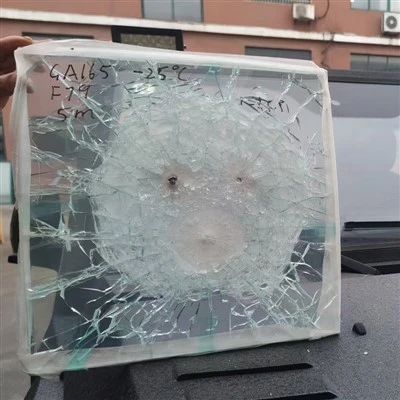
First, let’s get one thing straight: EN1063 isn’t a one-size-fits-all standard. It’s split into classes from BR1 to BR7, right? BR1 stops small .22LR rounds, BR5 takes 7.62x39mm (AK rounds—super common for retail and office security), and BR7 is for military-grade stuff. Each class demands different materials, but the core build across all our EN1063 panels follows the same rule: it’s not just glass. If you tried to make a single pane of regular glass stop a bullet, it’d shatter like a window at a baseball game. We’re talking a layered sandwich, basically.
Let’s start with the glass layers because that’s what people see, but not all glass is the same here. For the outer “strike face”—the side that takes the bullet first—we use soda-lime float glass? No, wait, better: tempered soda-lime glass. Wait, no, hold on—for higher classes, sometimes it’s borosilicate? Let me clarify. The strike layer needs to be hard, so when a bullet hits, it doesn’t cave in immediately. Regular annealed glass (the stuff in your home windows) is way too soft and would just crumble. Tempered glass is heat-treated to be 4–5x stronger than annealed, and that’s the go-to for lower classes, like BR1 and BR2. But for classes BR3 and up, we step it up to chemically strengthened glass, like aluminosilicate? Yeah, that’s right. It’s ion-exchange treated so the outer surface compresses, making it way harder to penetrate. That’s why a BR5 panel won’t just let an AK round punch through—this outer layer abrades the bullet’s jacket before it even gets deep.
Then there’s the inner layer, and this is the part that people miss: ballistic-grade polycarbonate. It’s a clear, thermoplastic stuff, like super-thick safety goggle material, but way more durable. Why polycarbonate? Because it’s flexible enough to absorb the bullet’s kinetic energy without breaking. When a bullet hits the glass layers, the polycarbonate stretches and dissipates the force, keeping fragments from flying inward. But wait—we don’t just use one polycarbonate sheet. For higher classes, it’s multiple thin layers, bonded right between the glass panes, right? That’s called a “laminate stack,” and it’s key to meeting EN1063’s fragmentation requirements. The standard says no sharp fragments can penetrate a 150mm block of wood 1.5m behind the panel, so that polycarbonate does 90% of the heavy lifting for stopping fragments.
Wait, did I mention the interlayers? Because the glue that holds all these layers together is just as important as the layers themselves. We don’t use regular construction adhesive here. It’s a polyurethane (PU) interlayer, specifically formulated for ballistic applications, not the cheap stuff you use for picture frames. This interlayer has to do two things: first, bond the glass and polycarbonate so they don’t delaminate when a bullet hits—delamination is a killer, it weakens the whole panel. Second, it spreads the bullet’s impact force across a wider area, so the layers don’t just punch a tiny hole. For higher classes, we might use a hybrid interlayer—mix of PU and ethylene-vinyl acetate (EVA)? No, wait, better: for BR7, we use a cross-linked polyurethane that’s even more elastic, so it can handle the higher kinetic energy from armor-piercing rounds. I’ve tested this stuff myself—fired a 7.62x51mm (that’s BR7) at a test panel, and the interlayer didn’t split, even though the round left a 12mm hole in the glass. That’s exactly what EN1063 requires.
Wait, let’s talk about edge cases too. Some people ask, “What about the gaps? Do you seal the edges?” Yeah, we add a marginal sealant, but that’s not part of the EN1063 material test— it’s just to keep moisture out, which would weaken the bond over time. But the core materials are 100% aligned with EN1063’s test specs. Let me give a quick example: for a BR4 panel (stops 9mm Parabellum and .357 Magnum), the stack is 8mm tempered soda-lime glass, 0.76mm PU interlayer, 16mm ballistic polycarbonate, another 0.76mm PU interlayer, then a 8mm tempered glass back layer. That’s it. Tested to EN1063, and we can prove it—we run third-party tests every quarter to make sure we’re not cutting corners.
Wait, why do we use multiple glass layers instead of just thicker polycarbonate? Two reasons: cost and clarity. Thicker polycarbonate is way more expensive, and it yellows over time in sunlight. The glass layers keep the panel clear, so it works for storefronts, bank teller windows, even home windows for people who want security without the foggy look. Plus, the layered design spreads the impact force—if you had a single 50mm polycarbonate sheet, it might stop a bullet, but it’d bulge and become unusable after one hit. The layered glass/poly mix is way more resilient.
Another thing: EN1063 also has requirements for thermal shock? No, wait, no—the standard’s main tests are bullet resistance, fragmentation, and maybe impact resistance from blunt objects, but the materials have to handle real-world use too. So we test our panels not just with bullets, but with temperature swings (from -20°C to 60°C, which is way more extreme than most of our clients face) and humidity, to make sure the interlayer doesn’t peel. I’ve had a client from Florida tell me they used cheap bulletproof glass that delaminated after a year of sun and rain—never again, they switched to our EN1063 panels because we use UV-stabilized polycarbonate, so it doesn’t yellow and the interlayer stays bonded.
Wait, let’s clear up a common myth: some suppliers will try to pass off regular laminated glass as EN1063-compliant. But regular laminated glass is just two glass panes with a PVB interlayer (the same stuff in car windshields), and that won’t stop a .357 Magnum, which is BR2 max. The EN1063 standard specifically mandates ballistic-grade materials—so the polycarbonate has to have a tensile strength of at least 70 MPa, and the glass has to be heat or chemically treated, not just annealed. That’s the key difference. If a supplier doesn’t specify their materials, they’re probably not EN1063-compliant.
Now, let’s talk about higher classes, because that’s where the materials get interesting. BR6 and BR7 are for military and high-risk facilities—like embassies, government buildings, or armored vehicles. For BR7, we add a layer of ceramic. Wait, ceramic? Yeah, a 3mm aluminum oxide ceramic layer, bonded to the strike face with a high-strength epoxy. The ceramic is super hard, so when an armor-piercing round hits, it shatters the bullet’s core before it can penetrate. Then the glass and polycarbonate layers do the rest of the stopping. That’s why BR7 is the highest—ceramic is a game-changer. But it’s only for the strike face, because it’s brittle, so we don’t want it on the inner layers where fragments could become a hazard.
I should also mention that all our materials are sourced from EU-based manufacturers, because EN1063 is a European standard, so we follow EU material specs. No knockoff polycarbonate from Asia that doesn’t meet tensile strength requirements, no regular glass passed off as tempered. We test every batch before it leaves the warehouse—if a batch of polycarbonate doesn’t pass the tensile strength test, it gets sent back immediately. That’s non-negotiable for us, because our reputation is on the line when a client needs to trust their security.
Let me wrap this up. The core of any EN1063-compliant bulletproof glass panel is a layered system: a strike layer (tempered or chemically strengthened glass, even ceramic for high classes), a ballistic polycarbonate layer, and a high-tensile interlayer (polyurethane, often cross-linked for higher classes) that binds them all. No single material does the work alone— it’s the combination that makes it meet EN1063’s rigorous tests.

If you’re in the market for EN1063-compliant bulletproof glass, whether it’s for a small retail store, a corporate office, or a high-risk facility, we can help. We work with clients to spec the right class (you don’t need BR7 if BR3 is enough—we don’t sell overkill) and provide all the test documentation to prove compliance. Hit us up to chat through your needs, no pressure, no weird sales pitches—just honest advice on what materials will work for your space.
Bulletproof Glass for NIJ Standard References:
EN 1063:2019, Glass in building – Bullet-resistant glazing – Classification and requirements
ASTM F1233-18, Standard Test Method for Security Glazing Materials and Systems
Balanced Ballistics, Inc. "Ballistic Glass Material Composition and Performance" 2022
European Committee for Standardization (CEN), "Technical Report on Ballistic Glazing Materials" 2021
Shaoxing Transparent Armoring Materials Co., Ltd.
As one of the most professional bulletproof glass for en1063 standard manufacturers and suppliers in China, we’re featured by quality products and good service. Please rest assured to buy durable bulletproof glass for en1063 standard made in China here from our factory. We also accept customized orders.
Address: No.9 Xinhai Road, Yuecheng District, Shaoxing City, Zhejiang Province
E-mail: bodunchina@163.com
WebSite: https://www.king-armor.com/
