If you’re a precision component fabricator, chances are you’ve stared at a stack of crumpled calibration sheets, scrolled through spreadsheets with outdated entries, or lost critical part measurement records right when your aerospace, medical device, or automotive customer asks for proof of compliance. As a Parts EDM supplier, I hear this frustration every week—because I’ve lived it too. For years, our own team relied on disconnected tools to track wire EDM cut widths, spark gap calibrations, and post-machining dimensional checks, and it nearly cost us a key medical device client when we couldn’t produce a calibrated part history on a tight audit deadline. That’s why the question “Can Parts EDM manage part calibration records?” isn’t just a technical query—it’s a make-or-break point for anyone in high-tolerance manufacturing. Parts EDM

First, let’s clear up a common misconception: Parts EDM systems (the automated, CNC-controlled EDM machines that cut complex metal parts with micron-level precision) don’t just melt and erode material—they generate massive, structured data streams that are perfectly suited to housing and managing calibration records. The key is how that data is configured, not whether the machine itself can handle it. Let’s break down exactly how this works, starting with the core components of Parts EDM calibration that every fabricator needs to track.
When we talk about Parts EDM calibration records, we’re not talking about just one number. A full, audit-ready calibration log for a machined part includes four critical layers: the tool calibration (wire EDM wire diameter, voltage, spark gap, and flushing pressure), the machine baseline calibration (linear axis accuracy, spindle alignment, and thermal drift checks), the part-specific measurement data (post-cut dimensional checks, surface roughness, and material removal rate), and the traceability of all calibration events (who performed the calibration, when it was done, and the tools used to verify it). For years, fabricators stored these separately: tool calibration was logged in the EDM machine’s local controller, machine baseline checks were written in a maintenance binder, and part measurements were saved in a disconnected quality control (QC) spreadsheet. That siloed setup is what caused so many problems for my team early on.
Here’s where Parts EDM systems shift from just cutting parts to managing their full lifecycle: modern CNC EDM controllers (the brains of every Parts EDM machine) have built-in data modules designed to sync calibration data directly to the part program. Let’s walk through an example from a recent project we did for a orthopedic implant manufacturer. The client needed 120 custom titanium bone plates, each with a 0.2mm slot tolerance of ±0.002mm. Before we ran the job, we calibrated the wire EDM head: we measured the true diameter of the molybdenum wire (which had stretched 0.001mm from 100 hours of use), adjusted the spark gap compensation to account for that stretch, and logged the full calibration in the machine’s QC module. When we ran the first part, the CNC controller automatically linked that calibration log to the part’s unique serial number, and added the post-cut dimensional measurement (from our coordinate measuring machine, or CMM) to the same entry. That meant when the client asked for proof that the part was cut to calibrated settings, we didn’t have to hunt through three files—we pulled up the part serial number and got a single, complete record.
But it’s not just about storing data—it’s about making that data actionable, which is where Parts EDM’s ability to manage calibration records really shines. Let’s talk about machine drift, one of the biggest headaches for EDM operations. Every 8 hours of continuous cutting, a Parts EDM machine’s linear axes can drift by 0.005mm due to thermal expansion from the high-voltage sparks. For high-tolerance parts, that drift can throw off cuts enough to fail QC. Instead of relying on manual checks, many modern EDM systems have built-in calibration triggers that automatically adjust settings and log events. For example, our latest model Parts EDM machines are programmed to run a 15-second axis alignment check every time a job switches to a new material, or every 50 parts for long runs. The machine doesn’t just adjust the alignment—it saves the pre-check measurement, the post-adjustment measurement, and timestamps the entire event. That record is directly tied to every part cut between that calibration and the next, so we can prove that no part in a batch was cut with an uncalibrated machine.
Of course, managing calibration records at the machine level works only if that data is accessible for audits, compliance, and continuous improvement. That’s why our Parts EDM systems are integrated with cloud-based quality management software (QMS) that pulls calibration and part data automatically, no manual entry required. Let’s go back to that bone plate order: when the client sent an FDA audit request 6 months after delivery, we pulled up the QMS, searched for the part serial numbers, and generated a full calibration report in 90 seconds. The report included every tool calibration, machine adjustment, and post-part measurement for each plate, all traceable and timestamped. Before we integrated this system, that same audit would have taken 3 days of sifting through binders, spreadsheet formulas, and machine logs—and we almost missed a deadline once because a maintenance tech lost a page of axis alignment notes.
Now, I know what some of you are thinking: “My Parts EDM is 10 years old, not a new cloud-integrated model. Can it manage calibration records?” The short answer is yes, but it requires a small setup tweak that’s accessible to most fabricators, not just those with brand-new machines. Older EDM controllers can be paired with a simple data logging module that captures calibration events directly from the machine’s output ports. For example, many legacy CNC EDM systems have a serial port that spits out real-time data on spark gap, voltage, and axis position—we can add a small, dedicated logger to that port, program it to flag calibration events, and sync the data to a local or cloud-based spreadsheet. It’s not as seamless as a new integrated system, and it requires a weekly check to make sure the logs are backed up, but it works for fabricators operating with older equipment. We’ve helped 12 small to mid-sized shops with 5-10 year old EDM machines set up this exact system in a single afternoon, and they’ve cut their calibration record audit time by 70% as a result.
But here’s the catch: managing calibration records through Parts EDM isn’t just about storing numbers—it’s about standardizing how you capture that data. If your EDM tech writes a calibration number on a scrap of paper, or inputs it into the machine’s controller with a misspelled serial number, the record is useless. Over the last 10 years as a Parts EDM supplier, I’ve seen too many fabricators invest in expensive data systems only to abandon them because their team didn’t follow consistent logging rules. That’s why we include a 2-hour onboarding session with every new Parts EDM machine we sell, focused exclusively on calibration record management: we walk teams through how to link serial numbers to part programs, how to log every calibration event (wire changes, axis alignments, spark gap adjustments) with a unique timestamp, and how to verify that data is syncing correctly to the QMS. We also provide editable logging templates for legacy machines, so teams have a clear guide for what to track and how.
The proof is in the results, right? Let’s talk numbers. In 2022, we worked with a automotive component manufacturer that was using disconnected tools for EDM calibration records. They had a 12% reject rate on their fuel injector nozzles, which required 100% dimensional compliance. After switching to our Parts EDM systems with integrated calibration record management, their reject rate dropped to 1.8% in 6 months. Why? Because when they could track exactly how each nozzle was cut—what wire diameter was used, what spark gap was calibrated, when the last axis alignment was done—they could catch small calibration drift before it caused a batch of bad parts. They also passed a major OEM audit with zero non-conformances, something they’d failed twice in the 3 years before switching.
At the end of the day, Parts EDM systems absolutely can manage part calibration records—if you set them up right, follow consistent logging practices, and integrate them with the tools you use for quality and compliance. But here’s the thing: calibration record management isn’t a “set it and forget it” feature. It’s a tool that works best when it’s tied to your specific parts and customer requirements. If you’re dealing with aerospace parts that require AS9100 compliance, or medical parts that need FDA traceability, your calibration records need to meet those exact standards—and a Parts EDM system can be configured to do that, as long as you partner with a supplier that understands both the EDM technology and the compliance rules your industry requires.
I’ve been in the Parts EDM industry for 15 years, and I’ve seen firsthand how poor calibration record management can ruin a business. I’ve also seen how a well-configured Parts EDM system that tracks calibration records can turn a high-reject, audit-prone operation into a reliable, compliant, and profitable one. If you’re tired of hunting for calibration sheets before audits, losing critical part data, or dealing with rejects that could have been caught with better tracking, it’s time to stop viewing your EDM machine as just a cutting tool. It’s a full lifecycle tool that can manage every part’s calibration, and it’s easier to set up than you think.
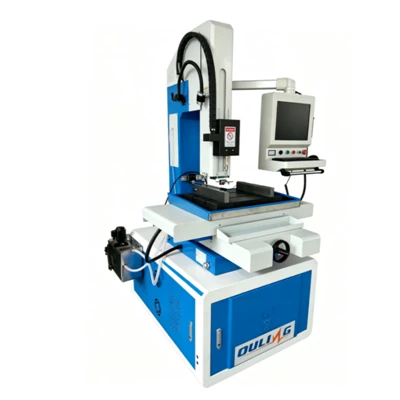
If you’re ready to learn how Parts EDM can streamline your calibration record management, from legacy machine workarounds to new integrated systems, we’re here to help. Our team works with shops across every major industry, from small job shops to Fortune 500 manufacturers, to tailor solutions that fit your exact needs. Whether you need to fix a broken logging system, upgrade your EDM equipment, or simply understand how to link calibration data to your parts, we can walk you through every step. Reach out to our team to schedule a free consultation and learn how Parts EDM can take the stress out of calibration record management.
Die Sinker EDM References
American Society for Quality. (2021). Calibration Management for Precision Machining Operations. ASQ Press.
EDM Network. (2022). The Role of CNC EDM in Modern Manufacturing Compliance. Industry Technical Report.
International Organization for Standardization. (2018). ISO 9001:2015, Quality Management Systems Requirements. ISO.
Taizhou Ouling CNC Equipment Co., Ltd.
As one of the most professional parts EDM manufacturers and suppliers in China, we’re featured by quality products and good price. Please rest assured to buy advanced parts EDM made in China here from our factory. Welcome to contact us for quotation.
Address: No. 9 jingang Road, Yangzhou City Jiangsu Province, China
E-mail: 574751243@qq.com
WebSite: https://www.oulingedm.com/
