If you’ve ever driven past a bustling sewage treatment plant, watched workers in high-visibility vests inspect bubbling aeration tanks, or seen filters backwashing to remove tiny debris, you might have wondered: who teaches those workers the skills to operate, maintain, and improve these critical facilities? As a supplier of sewage treatment plant equipment and custom solutions, I’ve spent 12 years visiting treatment facilities across North America, talking to plant managers, and helping new operators set up their systems. Over that time, I’ve learned that the educational programs for sewage treatment staff aren’t just “trade school classes”—they’re layered, evolving tracks tailored to everything from entry-level janitorial work to senior engineering roles. Let me walk you through what these programs look like, why they matter, and how the right training bridges the gap between a plant’s equipment and its environmental compliance. Sewage Treatment Plant
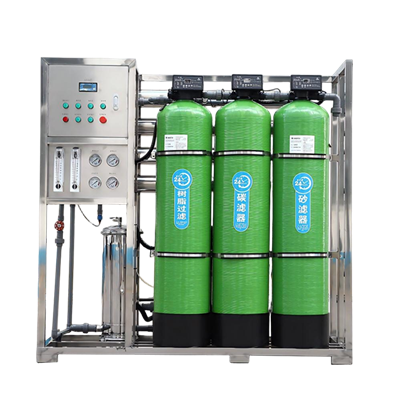
First, the entry-level foundation programs: these are for people who want to work in a treatment plant but don’t have a bachelor’s degree or specialized technical background. Most U.S. states and Canadian provinces require even basic plant staff to hold a Wastewater Treatment Operator License, and that starts with the Entry-Level Wastewater Operator Program. I’ve seen this program run two ways: through community college continuing education departments and directly by local environmental agencies. For example, the Ohio Environmental Protection Agency partners with 12 community colleges to offer a 160-hour core class that covers the basics of sewage collection (the pipes that bring waste to the plant), preliminary treatment (grit chambers and screens), and safety protocols. Last year, one of my clients in Cleveland told me they hired three former retail workers who’d taken this class; within six months, they were able to run the plant’s preliminary treatment line, spot a clogged screen that would have caused a backup, and pass their first license exam. What makes these programs practical, from a supplier’s perspective, is that they often emphasize hands-on familiarity with common equipment: centrifugal pumps, bar screens, and basic filter presses. When my team delivers a new batch of bar screens to a small town’s plant, the entry-level operators who took these continuing ed classes are usually the first to unbox and assemble them—so the program’s focus on equipment basics cuts down on training time for my install technicians.
Next, the technical certificate programs: these are for people who want to move beyond entry-level roles and specialize in core treatment processes like activated sludge or anaerobic digestion. Many community colleges and technical institutes offer 12- to 18-month certificate programs in wastewater technology, and these are far more detailed than entry-level courses. I recently spoke with Sarah, a senior operator at a 5-million-gallon-per-day plant in Indianapolis, who got her certificate from Ivy Tech Community College. She told me her program included labs where she ran a small-scale activated sludge system in a campus building, measuring dissolved oxygen levels, testing for sludge volume index, and troubleshooting why a batch of sludge wouldn’t settle. For our business, this matters because these operators are the ones who request custom equipment upgrades. Last year, Sarah’s plant reached out to us because her lab work taught her that their existing aeration system was wasting 22% of energy; she worked with our engineers to design a variable-frequency drive retrofit, which cut their annual energy bills by $18,000. What’s unique about certificate programs is that they’re aligned with state license tiers: most regions have four operator license levels (Grade 1 to Grade 4), and a 18-month certificate usually qualifies someone to take the Grade 2 or Grade 3 exam, rather than just the Entry-Level test.
Then there are the associate degree programs in environmental technology or wastewater management. These two-year degrees are for people who want to pursue mid-level roles, like plant supervisors or maintenance managers, and they dive deeper into both the science of treatment and the business side of running a plant. I’ve visited several plants in Michigan where half the maintenance team has an associate degree from Michigan State University’s College of Agriculture and Natural Resources. That program includes courses on wastewater microbiology (learning how bacteria break down organic waste), hydraulics (how water flows through treatment systems), and even contract management. One of my suppliers partners with a Michigan plant that has six associate-degree holders on staff; they handle everything from scheduling routine equipment maintenance to negotiating service contracts with local utility companies. For us, this group is key because they’re the ones who make long-term equipment decisions: last year, they chose our modular sewage treatment plant system for a new regional facility, because their degree program taught them about the efficiency of modular design compared to traditional site-built plants.
At the upper end, there are bachelor’s degree programs in environmental engineering, environmental science, or civil engineering with a water resources focus. These four-year degrees train the engineers, plant managers, and regulatory compliance specialists who design new treatment plants, lead large-scale upgrades, and ensure facilities meet EPA or provincial environmental regulations. I’ve worked with dozens of environmental engineering graduates over the years, and many of them complete a 6-month internship at a treatment plant before graduating. For example, a 2022 graduate from the University of California, Berkeley’s Department of Civil and Environmental Engineering interned at a 10-million-gallon-per-day plant in Los Angeles, where he helped design a new nutrient removal system. When his team from that plant later needed to replace their existing clarifiers, they reached out to us for a custom solution—one that incorporated the knowledge he gained during his internship. Bachelor’s degree programs also include coursework in regulatory compliance, which is critical because treatment plants face strict fines for discharging non-compliant effluent. Last year, a plant manager with a civil engineering degree told me that his program’s class on EPA discharge standards helped him spot a flaw in his plant’s testing process that would have resulted in a $120,000 fine; he adjusted the process using equipment we recommended, avoiding the penalty.
Beyond formal degree and certificate programs, there are continuing education and specialized training courses, which are often overlooked but essential for keeping plant staff updated as regulations and technology change. For example, many states require operators to complete 15 to 30 hours of continuing education every two years to renew their license, and these courses cover everything from new low-energy aeration technologies to emerging contaminants like microplastics and PFAS. I’ve spoken with operators who’ve taken specialized courses on anaerobic digestion for biogas recovery; one of my clients in Wisconsin used that training to add a biogas system to their plant, which now generates enough energy to power 30% of the facility. We also host free on-site training sessions for plant staff after we install new equipment—these are informal, hands-on sessions that cover how to operate our systems, perform basic maintenance, and troubleshoot common issues. Last quarter, we trained 47 operators from 12 different plants on our new intelligent control system, which uses real-time data to adjust aeration levels automatically. One operator told me after the training that the system cut his plant’s energy use by 18% in the first month, a result he wouldn’t have achieved without the specific training we provided.
I should also mention specialized programs for niche treatment scenarios, like small communities, industrial facilities, or decentralized systems (like cluster sewage systems for suburban neighborhoods). Many small towns can’t afford a full-time, highly trained staff, so they have access to state-sponsored modular training programs that focus on compact, low-maintenance treatment plants. For example, the Minnesota Pollution Control Agency runs a 10-day course specifically for operators of small cluster systems, which covers how to operate compact aerobic treatment units and maintain them with minimal parts. As a supplier of modular and compact treatment systems, I work with a lot of these small towns, and this program has become a go-to for their staff training. Last year, a town in northern Minnesota asked us to install a compact plant; we connected their two operators to the MPCA’s course, and after they completed it, they were able to run the plant independently—no additional long-term training needed. For industrial facilities, like food processing plants or pharmaceutical factories, there are also industry-specific training programs that focus on treating high-strength waste, which is very different from domestic sewage. I recently worked with a food processing plant in Iowa that had a custom industrial waste system; their staff completed a specialized course from the Food Processors Association on treating organic waste, and when they needed to upgrade their system, they chose our custom industrial treatment equipment because we’d tailored our solution to the processes they learned in that course.
What’s clear after 12 years in this industry is that these educational programs don’t just teach skills—they create a pipeline of skilled workers who can keep sewage treatment plants running safely, efficiently, and in compliance with environmental rules. I’ve seen how a poorly trained entry-level operator can accidentally cause a plant backup that costs thousands in repairs, and how a well-trained engineer can design a system that saves a town millions over its lifetime. For plant managers, investing in their staff’s education isn’t just a regulatory requirement—it’s a way to reduce long-term maintenance costs, avoid fines, and even generate revenue through biogas or nutrient recovery. For us as a supplier, working with educational programs means we can deliver equipment that’s already familiar to the operators who will use it, and we can design solutions that align with what students are learning in their classes.
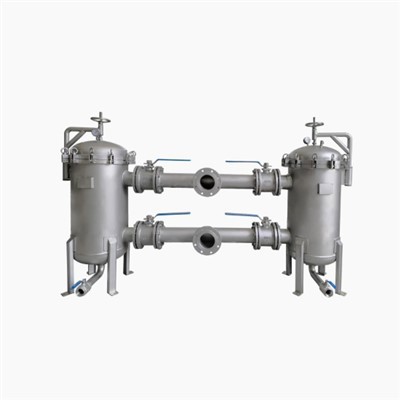
If you’re a plant manager looking to upgrade your equipment, train your staff, or explore new technologies for your treatment facility, I’m here to help. Our team has worked with communities, industrial plants, and engineering firms across the region, and we can help you find the right equipment and training support to meet your goals. Reach out to discuss your specific needs, and let’s work together to make your sewage treatment plant more efficient and reliable.
Sewage Treatment Plant References
Wastewater Operator Certification Requirements, U.S. Environmental Protection Agency.
Community College Programs in Wastewater Technology, American Water Works Association.
Industrial Wastewater Treatment Training Guidelines, National Association of Water Companies.
2023 Wastewater Energy Efficiency Report, Water Environment Federation.
Shandong Lingke Environmental Technology Co., Ltd.
We’re well-known as one of the leading sewage treatment plant manufacturers and suppliers in China, featured by quality products and good price. Please rest assured to buy durable sewage treatment plant for sale here from our factory. Customized orders are welcome.
Address: 100 Meters South of the Intersection of County Road 042 and National Highway 309, Changle County, Weifang City, Shandong Province
E-mail: aileenlin@sdlingkegroup.com
WebSite: https://www.lkecotech.com/
