If you’ve ever chipped away at brick, cut through concrete, or ground down old mortar for a masonry project, you know how brutal cordless angle grinders can feel when they’re not up to the job. As someone who’s spent years supplying cordless power tools to tradesmen and DIYers alike, I’ve heard every frustration: the battery dying mid-cut, the wheel slipping on concrete, the unit shaking so bad it makes your hands numb, or even worse— the motor giving out halfway through a big job. Masons, bricklayers, tile setters, and even weekend warriors tackling patio renovations don’t just need a grinder that works; they need one built for the unique demands of masonry work. But with so many options flooding the market, how do you actually pick the right one? No fluff, no fancy marketing jargon, just real talk from someone who’s been in the tool business for years. Cordless Angle Grinder

First, let’s cut to what makes a cordless angle grinder for masonry different from, say, one for metal work. Masonry is hard— really hard. Concrete, brick, stone, and mortar are abrasive, dense, and put way more stress on a grinder’s motor and battery than thin metal ever does. So the best grinder for you isn’t just the cheapest or the one with the highest voltage number you see on a box. It’s a mix of three core things: power to cut through dense material without bogging down, battery life that doesn’t leave you stranded mid-project, and build that can take a beating when you’re working in tight, messy job sites.
Let’s start with power, because that’s make-or-break for masonry. A lot of brands will scream “20V! 60V!” on their packaging, but voltage only tells part of the story— torque is what actually moves your wheel through masonry. Torque is how much rotational force your grinder has, and for masonry, you don’t want anything under 6,000 RPM (rotations per minute) for a 4.5-inch wheel, the most common size for home and small trade work. Wait, some might say 5-inch is better? Let’s be real: 5-inch wheels give a deeper cut, but they weigh more, drain batteries faster, and are way harder to maneuver on things like tile backsplashes or tight brick joints. For most people, 4.5-inch is the sweet spot. I’ve seen guys try to use a 3-inch grinder for concrete and it’s just torture— they’re cranking the handle so hard, they’re wearing out their wrists in an hour, and the blade still struggles to cut. A good masonry grinder will not only hit that RPM mark but also have a brushless motor. Old brushed motors lose power over time, especially when they’re dirty or exposed to concrete dust, and they waste battery. Brushless motors are way more efficient, last 2-3 times longer, and keep consistent torque even when you’re pushing hard into brick. That’s non-negotiable for me when I’m picking a grinder for stock.
Next up, battery life and compatibility. Nothing’s worse than having a perfect grinder, only to have it die after cutting 10 bricks when you still have 20 to go. Lithium-ion batteries are the way to go, obviously, but not all lithium-ion is equal. For masonry work, you want 5.0Ah (amp-hour) batteries at minimum, and 6.0Ah is even better. Amp-hour is how much charge a battery holds, so a 6.0Ah will last longer than a 5.0Ah, but also, make sure your grinder has something called “battery depletion protection.” What that means is, if your battery starts to get low, it doesn’t just die suddenly mid-cut— it slows down smoothly so you can finish your current pass and swap the battery without messing up your line. Also, if you’re going to be buying multiple grinders for a team, get one with a universal battery platform. A lot of brands make batteries that work across their whole line— so if you have a cordless drill, a circular saw, and your grinder all using the same battery, you don’t have to buy a dozen extra batteries, and you can just swap one battery between tools on a job site. I can’t tell you how many times a job has been held up because a guy showed up with a grinder that only uses its own brand’s batteries, and his extra one is still charging in his truck. Small stuff, but it adds up.
Then there’s build quality and user experience, because masonry work is messy. Concrete dust is everywhere, and that stuff gets into every crevice of your tool if it’s not sealed right. A grinder with a dust-sealed switch and motor housing is way less likely to break down after a few months of grinding. Also, handle design— you don’t want a handle that’s too thin or too bulky, especially when your hands are covered in dust and wet from cleaning off bricks. Side handles that are adjustable, not just one fixed position, let you grip it from whatever angle works for a cut, whether you’re crouching low on a patio tile or reaching up on a wall. Some grinders also have a kickback brake, which stops the wheel in less than a second if it binds on the masonry. That’s a huge safety feature I swear by— I’ve seen way too many guys get thrown off balance when a wheel catches on concrete, and a brake can prevent a bad injury. Oh, and the wheel guard matters too. For masonry, you need a guard that fits tight around the wheel, but still has enough ventilation so the wheel doesn’t overheat while you’re cutting through hard concrete. If the guard is too loose, it’s a hazard; too tight, and your wheel will burn out fast.
Now, let’s talk about the common mistakes people make when picking a grinder for masonry. A lot of DIYers go for the cheapest cordless option at the hardware store, thinking “it’s just a grinder, right?” But I’ve seen those $80 grinders die after 2 hours of masonry work, when a good one will last 5 years if you take care of it. Others go too big: a 9-inch grinder is overkill for most home projects, and it’s heavier, harder to control, and drains batteries way faster. Another mistake is not matching the right wheel to the grinder. Masonry needs a diamond blade or a silicon carbide wheel, not a metal grinding wheel. I see people grab their metal wheel by accident and wonder why it’s taking them twice as long to cut. And don’t forget— always make sure your grinder has a lock-off switch, so it doesn’t accidentally turn on in your tool bag full of concrete dust. That’s a quick way to ruin a good grinder.
Wait, what about corded vs. cordless? A lot of people ask me if corded is better for masonry. Yeah, corded has more power, no battery to worry about, but you’re tied to an outlet. For masons working on a big job site where there are power hookups, corded is fine. But if you’re moving around a lot, or working on a remote patio, or just don’t want to trip over a 50-foot cord while cutting bricks, cordless is way more convenient. The good cordless grinders now have almost the same power as corded ones, so you’re not sacrificing performance just to be mobile. That’s why we push cordless so hard for most people now— unless you’re a full-time mason working 10-hour days on a big commercial job where you can have power everywhere, cordless is the way to go.
Now, let’s get specific. The grinders we consistently recommend to our customers for masonry are the ones that check all those boxes: brushless 4.5-inch motor with 6,000+ RPM, 5.0Ah or larger compatible batteries, dust-sealed housing, adjustable side handle, and a kickback brake. There’s no “one perfect grinder” for everyone, but this is the sweet spot for most projects. If you’re a DIYer doing a one-time patio renovation, you don’t need to drop $300 on a top-of-the-line model, but you also don’t want to buy the $100 one that will die after your first project. For trade guys who use their grinder 40 hours a week, it’s worth splurging a little more for a model that’s built to last.
Wait, let’s talk about maintenance too, because even the best grinder will die fast if you don’t take care of it. After every masonry job, take a minute to blow out the dust from the motor vents with an air compressor, or even a can of compressed air. Don’t use water— that can damage the motor. Check the wheel guard and handle for any wear, and make sure the battery terminals are clean so your battery charges properly. If you’re storing it for a while, take the battery out and keep it in a cool, dry place, not in the bottom of your tool bag where concrete dust and moisture can get to it. Small steps, but they’ll double the life of your grinder.
I’ve been in the tool supply business for over 15 years, and the number one thing I hear from customers is that they wasted money on a grinder that wasn’t built for masonry. They try to use a grinder meant for metal work to cut brick, and it bogs down, overheats, and breaks. Or they buy a cheap brand with no warranty, and when it dies after a month, they’re out the cost plus the time to finish their project. That’s why we only stock grinders that are tested for masonry work— we don’t carry every brand out there, just the ones that pass our own on-job tests. We’ve seen grinders from big-name brands that are garbage for masonry, and off-brand ones that punch way above their weight. It’s not about the name on the box, it’s about what it can do.
So if you’re in the market for a cordless angle grinder for masonry, don’t just look at the voltage number on the front. Dig a little deeper: check the torque, the motor type, the battery compatibility, and the build quality. If you’re unsure, reach out to someone who actually knows what they’re talking about— not a salesperson at a big box store who only cares about meeting a quota, but someone who’s spent time using these tools on job sites. We’ve helped hundreds of masons, tile setters, and DIYers pick the right grinder for their exact project, and we can help you too. Whether you’re doing a small bathroom tile job, a big patio renovation, or running a contracting business, we have options that fit every budget and use case. We don’t do one-size-fits-all, because we know masonry work is messy, varied, and needs a tool that can keep up.
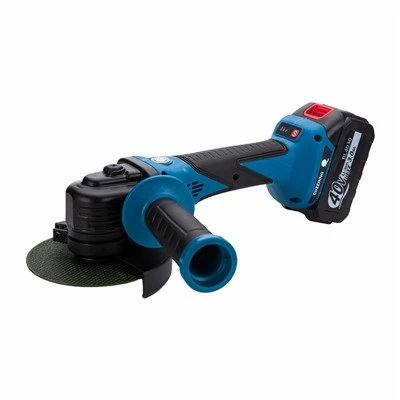
Don’t waste another job or another weekend fighting a grinder that dies mid-cut or shakes your hands numb. Get a grinder built for masonry work— one that’s powerful enough to cut through concrete, durable enough to take the dust and abuse, and convenient enough to not tie you to a cord. If you’re ready to find the right one for your next project, get in touch with our team to chat through your needs. We’re here to answer questions, compare options, and make sure you get a tool that works as hard as you do.
100mm Angle Grinder References:
- Power Tool Institute. (2022). Cordless Power Tool Performance Guidelines for Masonry Applications.
- Occupational Safety and Health Administration (OSHA). (2021). Safety Standards for Angle Grinder Use in Construction Trades.
- Consumer Reports. (2023). Cordless Angle Grinder Testing: Durability and Performance for Masonry Work.
- Bosch Power Tools. (2022). Brushless Motor Technology for Abrasive Tool Applications.
- Makita U.S.A. (2023). Cordless Battery Compatibility and Runtime for Heavy-Duty Construction Tools.
Zhejiang Cheering Sewing Machine Co., Ltd.
With abundant experience, we are one of the most professional cordless angle grinder manufacturers and suppliers in China. Please feel free to wholesale advanced cordless angle grinder for sale here from our factory. We also accept customized orders.
Address: No.69 Heping Road, Lishui, Zhejiang, China
E-mail: gxjlq@126.com
WebSite: https://www.cheering-machinery.com/
