Hey there, if you’re wondering “what’s the heat output of a typical hot air furnace?” — let’s cut through the jargon and break this down like we would with a customer who’s just picked up the phone to ask, no stuffy industry lectures here. As a hot air furnace supplier, I get this question all the time — whether it’s a homeowner replacing an old unit, a builder sizing equipment for a new home, or even a small business owner trying to keep their shop warm in the winter. It’s not just a random number; getting this right means your space stays comfy, your utility bills don’t skyrocket, and your furnace doesn’t run itself ragged. Hot Air Furnaces
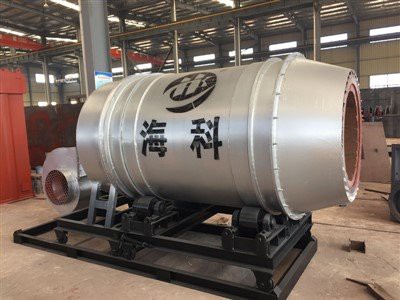
First, let’s nail down the basics: when we talk about heat output for hot air furnaces, we’re usually referencing BTUs (British Thermal Units) — that’s the standard measure for how much heat a unit produces in an hour. One BTU is basically the amount of heat needed to warm one pound of water by one degree Fahrenheit, so it’s not some abstract factory number. Now, a “typical” furnace isn’t one-size-fits-all — that’s the mistake a lot of people make. A furnace for a 1,000 sq ft city apartment is way different than one for a 3,000 sq ft suburban house, right?
Let’s start with the residential side, since that’s most of the calls I get. For a standard single-family home in a climate zone that’s not super extreme (think mild winters, like parts of the Pacific Northwest or upper South), the average hot air furnace puts out between 40,000 and 100,000 BTU per hour. Wait, but let’s narrow that down: most new builds or replacements for homes between 1,200 and 2,500 sq ft land right around 60,000 to 80,000 BTU. Why? Because you’ve got walls, windows, insulation, even ceiling height to account for — a 9 ft ceiling is different than a 12 ft vaulted one, which needs more heat.
But here’s the thing: old furnaces used to have a “nominal” BTU rating, which was basically a marketing number, not the actual heat they pumped out. Now, every reputable furnace (and yeah, that’s the stuff we sell) has an AHRI-certified (Air Conditioning, Heating, and Refrigeration Institute) rating, which is the real, tested output. A lot of people mix up input and output, too — input is how much fuel (natural gas, propane, whatever) the furnace burns, output is the usable heat that goes into your ducts. For efficiency, a modern mid-efficiency furnace might convert 80% of that input to heat; high-efficiency ones hit 95% or more, so their output is way closer to their input. That’s why a 90,000 BTU high-efficiency furnace will heat better and cost less to run than a 100,000 BTU old 70% efficiency model.
Now, if you’re not a homeowner, maybe you’re running a small commercial space — a café, a storage unit, a small warehouse. Those need way more heat. A typical hot air furnace for small commercial use is 100,000 to 300,000 BTU. A 50,000 sq ft warehouse might even need a unit pushing 400,000 BTU, depending on how well it’s insulated and how many loading doors you’ve got (those things leak cold air like crazy, trust me). I’ve had a few café clients who thought a 60,000 BTU would cover their 1,800 sq ft space, but the big glass storefront and the number of people coming in and out meant they needed 80,000 BTU — otherwise, it’d never get warm when it’s 20 degrees outside.
Wait, let’s clear up a common myth: people think “bigger is better,” but that’s the fastest way to waste money. A furnace that’s too big will cycle on and off constantly — it’ll heat a room too fast, shut off, then cool down again, wasting fuel and wearing out the parts faster. Too small, and it runs nonstop, never keeping the space comfortable. That’s why when someone calls us, we don’t just say “typical is X BTU” — we ask for details: square footage, climate zone, insulation R-value, number of windows, even how many people are in the space (hot bodies add heat, duh). For example, a home in northern Minnesota (super cold) might need 100,000 to 120,000 BTU, while the same size home in Florida might only need 40,000 to 60,000. It’s all context.
Let’s also talk about the types of fuel, because that affects output too, for anyone who might be wondering. Natural gas furnaces, which are the most common in North America, have typical outputs in the ranges I mentioned — 40k to 120k for residential, up to 300k for small commercial. Propane furnaces are a bit different: propane has a higher energy density than natural gas, so a propane furnace of the same input might have a slightly higher output, but usually, we size them the same as natural gas for the same space, since propane costs more per BTU, so you don’t want to oversize. Electric hot air furnaces (yes, those exist, mostly for off-grid or areas without gas lines) have lower output efficiency — around 100% technically, but wait, no, electric furnaces don’t have combustion loss, but their input is electricity, so a 5 kW electric furnace puts out about 17,000 BTU, 10 kW is 34,000 BTU. So a 2,000 sq ft all-electric home would need a 15 kW furnace, or 51,000 BTU — that’s a good number to remember if you’re going electric.
Another point: ductwork matters for output. A furnace might be rated for 80,000 BTU, but if your ducts are leaky, or too small, or poorly insulated, you’re not getting all that heat to your rooms. I’ve had customers install a fancy 90k BTU furnace, call us complaining it’s not warm, and we check their ducts and find 30% of the heat is leaking out into the attic. That’s a quick fix that makes the furnace’s actual output way closer to its rated number. So when we talk about “heat output,” it’s not just the furnace itself — it’s the whole system.
Let me throw in some real examples from recent customers to make this concrete. Last month, a family in Chicago called us, looking to replace their 20-year-old furnace. Their home was 1,800 sq ft, good insulation, average windows. Their old furnace was 70,000 BTU, but their utility bills were through the roof, and the downstairs was always cold. We recommended an 80,000 BTU high-efficiency natural gas furnace. The old one was only 78% efficient, so its actual output was 54,600 BTU (70k * 0.78), which was too small for their cold Chicago winters. The new 80k BTU, 95% efficient, puts out 76,000 BTU — perfect, right at what they needed. A month later, they texted us saying their bills were down $120 a month, and the whole house stayed warm.
Another one: a small bakery in Denver, 2,200 sq ft, with big oven vents that pull out heat, so they needed extra. They thought a 100k BTU would work, but we calculated they needed 120k, since the oven vents were siphoning off about 20% of the hot air. We sized them a 120k BTU furnace, and now their kitchen stays at 72 degrees even when Denver’s at 10 below in January.
Now, if you’re someone who’s just starting out, and you don’t want to call a supplier yet, here’s a quick rough rule of thumb to ballpark it: 30 to 50 BTU per square foot for residential homes. That’s the “typical” range most contractors use. So 1,500 sq ft = 45,000 to 75,000 BTU. If you’re in a super cold climate (below 0 degrees in winter), go with 50 BTU per sq ft. Mild climate (above 30 degrees in winter) can get away with 30. For commercial, it’s a bit trickier — 40 to 60 BTU per sq ft, depending on ventilation, insulation, and how often doors are opened. Again, that’s just a ballpark, not a hard rule, so don’t rely on that alone.
Let’s also address a common mistake people make when shopping: they fixate on the BTU number as the only selling point. A lot of discount furnaces online will list a high BTU, but they’re low efficiency, so their actual usable heat is way lower. For example, a 100k BTU 80% efficiency furnace has an output of 80,000 BTU, while a 90k BTU 95% efficiency furnace has 85,500 BTU — the smaller, higher efficiency unit is actually putting out more heat and is cheaper to run. That’s where a lot of people get burned (pun intended) — they go for the cheap big BTU unit, end up paying more in gas every month.
So, circling back to the original question: “what’s the heat output of a typical hot air furnace?” There’s no one single number, but the sweet spot for most residential homes is 40,000 to 100,000 BTU, with 60,000 to 80,000 being the most common for average-sized homes in moderate climates. For small commercial, it’s 100,000 to 300,000 BTU. But the real answer is that it depends on your space, your climate, your existing ductwork, and your fuel type — and that’s why working with someone who knows the stuff matters.
If you’re in the market for a new hot air furnace, or you’re not sure if your current one is sized right, don’t guess. We’ve helped hundreds of homeowners and businesses get the right unit without overpaying. Just reach out to us, share the basics about your space, and we can walk you through what makes sense for you. No pushy sales stuff, just straight answers based on what’s worked for our customers over the years.
Shot Blasting Machines References
AHRI. (2023). Standard for Performance Rating of Warm Air Furnaces. Air Conditioning, Heating, and Refrigeration Institute.
U.S. Department of Energy. (2022). Heating and Cooling Your Home: A Guide for Homeowners.
National Fuel Gas Supply Corporation. (2021). Sizing Hot Air Furnaces for Residential and Light Commercial Applications.
Jiangsu Haike Environmental Tech Co., Ltd.
As one of the most professional hot air furnaces manufacturers and suppliers in China, we’re featured by quality products and good service. Please rest assured to wholesale customized hot air furnaces at competitive price from our factory. Contact us for quotation.
Address: No.1, Wei’er Branch Road, Shanggang Industrial Park, Jianhu County, Yancheng City, Jiangsu Province, China
E-mail: 17388487000@163.com
WebSite: https://www.jshkhbwm.com/
