If you’re a facility manager, building owner, or operations lead tasked with keeping commercial HVAC systems running smoothly, you’ve probably asked yourself this question more than once: How long does a chiller actually last? As someone who’s worked in the chiller supply and maintenance space for over 12 years—first as a field technician troubleshooting units at hospitals and industrial warehouses, and now as part of a team that’s supplied hundreds of chillers across North America—I can tell you there’s no one-size-fits-all answer. But I can break down what moves the needle, how to extend your chiller’s lifespan, and what red flags mean it’s time to stop patching and start planning. chiller
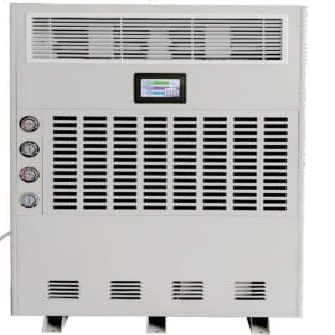
First, let’s get a baseline. Most new commercial chillers—whether air-cooled or water-cooled, which are the two main types we supply—are built to last between 15 and 25 years, if they’re cared for properly. That range isn’t arbitrary. It comes from decades of data we’ve collected on units we’ve sold and serviced, paired with industry standards from HVAC engineering groups like the Air-Conditioning, Heating, and Refrigeration Institute (AHRI), which sets the benchmarks for equipment durability. The 15-year mark is what you’ll see for chillers that operate in harsh environments, like a steel mill where the air is thick with dust, or a grocery store that runs 24/7 to keep freezers cold. The 25-year mark is for chillers in controlled, low-stress settings, like a small office building where the system only kicks on during business hours, and maintenance is scheduled consistently.
Wait, let’s clarify that: the “type” of chiller plays a smaller role than you might think, but it’s still worth noting. Water-cooled chillers, for example, use a cooling tower to dissipate heat, so they have more moving parts that are exposed to water chemistry issues. That means they tend to land in the middle of the lifespan range—18 to 22 years—if the tower’s water is treated regularly to prevent scale or algae buildup. Air-cooled chillers, on the other hand, rely on fans to blow air over the condenser coils, so their parts are more exposed to airborne debris (like leaves, pollen, or construction dust). They often fall closer to the 15 to 20 year range, because clogged coils make the system work harder, speeding up wear and tear. But I’ve seen air-cooled chillers last 27 years in a suburban office park where the grounds crew keeps the area around the unit clear of debris, and water-cooled chillers fail at 12 years in a factory where no one checked the tower’s water for five straight years. So environment and maintenance matter far more than the chiller’s core design.
That brings me to the biggest factor that determines your chiller’s actual lifespan: how well you maintain it. I’ve seen two identical 100-ton air-cooled chillers installed side by side in a 20-story apartment building. One building’s manager scheduled quarterly maintenance: wiping down coils, checking refrigerant levels, tightening electrical connections, and testing the compressor every three months. That chiller ran reliably for 22 years, and we only replaced it because the building was undergoing a full HVAC upgrade to cut energy costs. The other building’s manager skipped maintenance to save money, only calling us when the chiller stopped cooling in July. By the time we got there, the coils were so clogged with pollen that the compressor had overheated and worn out its bearings. That unit died at 7 years old. That’s a gap of 15 years, all because of a few hundred dollars in quarterly maintenance costs.
Let’s break down what “proper maintenance” actually looks like, because it’s not just a vague term. For every chiller we supply, we include a recommended maintenance schedule, but here’s the non-negotiable stuff:
- Quarterly inspections: Check refrigerant levels (low refrigerant puts extra strain on the compressor, which is the chiller’s most expensive part to replace), clean condenser/evaporator coils, and test electrical components for wear.
- Annual tune-ups: For water-cooled units, flush and treat the cooling tower water to prevent scale, algae, and corrosion. For both types, test the compressor’s motor and check for leaks that can waste energy and damage parts.
- Annual load testing: This is a step a lot of people skip, but it’s critical. Load testing makes sure your chiller is operating at its rated capacity, not running at 120% just to keep up with demand. That extra strain cuts years off its lifespan.
I’ve had customers tell me, “My chiller works fine, I don’t need maintenance,” but what they don’t see is the compressor running 10 hours a day extra because the coils are clogged, or the refrigerant leak that’s costing them $500 a month on energy bills. That “fine” unit is slowly degrading 2x faster than it should.
Another thing that impacts lifespan: how you operate the chiller. A lot of facility managers run their chillers at full capacity 24/7, even when the building only needs 60% cooling. That constant overworking speeds up wear on the compressor, fan motors, and pumps. We always recommend installing variable frequency drives (VFDs) if you don’t already have them—they adjust the chiller’s output to match actual cooling demand, so it only uses as much energy as it needs. I’ve seen units with VFDs last 3 to 5 years longer than identical units running at fixed speed, all because they’re not working overtime. Also, avoid “short cycling”—when the chiller turns on and off every few minutes instead of running in consistent cycles. That puts stress on the compressor every time it starts, just like a car that’s always stopping and going instead of cruising at a steady speed.
Now, let’s talk about when you should start planning to replace your chiller, instead of patching it. I know it’s tempting to repair a $1,000 part instead of buying a new $50,000 chiller, but there’s a point where repairing becomes a losing game. The rule of thumb we use with our customers is: if your repair costs are more than 30% of the cost of a new chiller, and your unit is over 15 years old, it’s time to replace. Let’s say you have a 16-year-old chiller, and the compressor goes out. A new compressor for that unit costs $18,000. A new chiller costs $55,000. $18k is 32% of the new unit’s cost, so that’s a no-brainer—replace it. Why? Because if you fix the compressor, you’re still dealing with a unit that’s near the end of its lifespan, and another part (like the evaporator or the control panel) is likely to fail within the next 3 to 5 years. You’ll end up spending $18k + $10k + another $10k, which is more than the cost of a new, efficient unit, and you’ll have downtime while you’re waiting for repairs every time something breaks.
I’ve also seen customers hold onto their chillers way past their prime because they’re scared of the upfront cost. But here’s the hidden cost of old chillers: energy inefficiency. A 20-year-old chiller uses about 30% more energy than a new, Energy Star-rated chiller. If your chiller runs 1,500 hours a year, and your electricity costs $0.12 per kWh, that’s an extra $2,700 a year in energy bills. Over 5 years, that’s $13,500—enough to cover a big chunk of a new chiller. Plus, new chillers are quieter, have better controls, and can be connected to building automation systems, which reduce operational headaches.
But what if your chiller is only 10 years old, and it’s having issues? That’s usually not a lifespan problem—that’s a maintenance gap. Last year, a small restaurant owner called us because their 8-year-old water-cooled chiller was blowing warm air. We came out, checked the cooling tower, and found that no one had cleaned the strainer (a small mesh filter that catches debris in the water line) in 3 years. The strainer was completely clogged, so water wasn’t flowing through the condenser, making the compressor overheat. We cleaned the strainer, flushed the tower, and the chiller worked like new. No replacement needed, just a missed maintenance step.
I wish I could give you a hard number that says “your chiller will die at exactly X years,” but the reality is that it’s a combination of care, environment, and luck. I’ve seen a 25-year-old chiller still running perfectly in a small library, and a 12-year-old unit replaced because of a manufacturing defect (those are rare, but they happen, which is why we offer 5-year warranties on most of our units).
The biggest takeaway? If you want your chiller to hit the top end of that 15 to 25 year range, consistent, proactive maintenance is non-negotiable. Don’t wait for it to break to call a technician. Schedule those quarterly checks, treat your cooling tower water, test the load, and make sure you’re not running it harder than it needs to. If you’re not sure where to start, or you want a free assessment of your current chiller’s condition, reach out to our team. We’ll come to your site, check your unit’s performance, explain what steps you can take to extend its life, and help you plan for any future replacements so you’re not caught off guard when summer hits and your old chiller gives out.
Don’t wait until the middle of a heatwave to deal with your chiller. Proactive care will save you money, downtime, and headaches in the long run.
Integrated Cooling System References
Air-Conditioning, Heating, and Refrigeration Institute (AHRI). 2023. Commercial Chiller Durability and Performance Standards.
Sheet Metal and Air Conditioning Contractors’ National Association (SMACNA). 2022. HVAC Maintenance Best Practices for Commercial Systems.
U.S. Department of Energy. 2021. Energy Efficiency Trends in Commercial HVAC Equipment.
Hangzhou Dayu HVAC Engineering Co., Ltd.
As one of the most professional chiller manufacturers and suppliers in China, we have world-leading production equipment and strong manufacturing capabilities. If you’re going to buy customized chiller made in China, welcome to get quotation from our factory. For price consultation, contact us.
Address: Room 1004, Building 1, Xicheng Business Tower, Xihu District, Hangzhou City, Zhejiang Province, China
E-mail: info@hi-hvac.com
WebSite: https://www.hi-hvac.com/
