If you’ve ever stood on a waterfront and watched a car carrier glide into port, its decks stacked with new SUVs, flatbed trailers, and heavy construction equipment, you’ve witnessed the work of a roll-on/roll-off (Ro-Ro) terminal. These specialized ports are the unsung hubs of global logistics, designed to move wheeled cargo without the cranes and rigging that container ships rely on. As a Ro-Ro equipment supplier, I get asked this question all the time: “How many Ro-Ro terminals are there worldwide?” It’s not a number you can pull up in a five-second Google search, and the answer depends on how you define a Ro-Ro terminal, how you measure activity, and which regions you count. Let me break this down from the perspective of someone who’s spent 18 years equipping these ports with ramp systems, mooring equipment, and cargo handling tools. Roll-on/roll-off

First, let’s get the definition right. A Ro-Ro terminal isn’t just a port that accepts a Ro-Ro ship. By industry standards, a dedicated Ro-Ro terminal has fixed or mobile ramps that connect the ship’s deck directly to the terminal yard, space for storing wheeled cargo between voyages, and infrastructure to load/unload trucks, trailers, and heavy machinery on short notice. Some ports have a single Ro-Ro berth shared with general cargo, but those rarely qualify as “dedicated” because their operations are limited. Most terminals also handle passenger ferries too, especially in Europe and parts of Asia, but the core function remains moving wheeled freight.
Now, for the hard numbers. The International Association of Ports and Harbors (IAPH), the global body that represents port operators, publishes periodic surveys of Ro-Ro capacity. Their 2023 dataset counts approximately 1,240 dedicated Ro-Ro terminals worldwide. But that number splits sharply along regional lines. Europe is the clear leader, with 410 terminals—nearly a third of the global total. That makes sense: Europe’s short-sea shipping network, which moves trucks and trailers between 27 member states without crossing oceans, is the backbone of its supply chain. Ports like Rotterdam in the Netherlands, Felixstowe in the UK, and Gdynia in Poland handle more Ro-Ro cargo than most global ports, and many small European coastal towns have their own small Ro-Ro terminals to service local trade.
Next comes Asia, with 385 terminals. Asia’s growth over the past two decades has driven a surge in Ro-Ro capacity, especially in East Asia. China, in particular, has expanded its Ro-Ro network to support the export of automobiles—electric vehicles alone now account for 40% of China’s outbound Ro-Ro cargo, up from 12% in 2018. South Korea, Japan, and Southeast Asia also have a high concentration of Ro-Ro terminals, mostly to support trade in agricultural equipment, construction machinery, and finished consumer goods. But here’s a quirk: many Asian Ro-Ro terminals are integrated into multipurpose ports, so they’re often undercounted in surveys. For example, the Port of Singapore has three Ro-Ro berths, but they’re listed under the port’s general cargo operations, so they’re easy to miss if you only look for “dedicated” terminals.
North America lags behind at 220 terminals. Most of these are concentrated in the United States, along the East Coast (Savannah, Baltimore, New York) and West Coast (Los Angeles, Seattle), plus a handful in Canada to service trade with Europe. The U.S. uses Ro-Ro for cross-border trade with Mexico and Canada, and for moving military equipment to and from overseas bases, which makes up a large portion of its heavy Ro-Ro volume. South America has 135 terminals, mostly in Brazil and Argentina, where Ro-Ro is the primary way to move heavy farm equipment and exports of soy and grain via rail to port.
The Middle East and Africa together account for the remaining 90 terminals. Most of these are small, with only two or three Ro-Ro berths, serving regional trade in vehicles and construction materials. The only exception is the Jebel Ali Port in Dubai, which has a dedicated Ro-Ro terminal that handles transshipment cargo for East Africa and South Asia. It’s worth noting that many African ports are expanding their Ro-Ro capacity right now, as governments invest in road infrastructure to connect inland factories to coastal trade routes.
But here’s the catch: 1,240 is not a static number. Every year, an average of 35 new Ro-Ro terminals open, mostly in emerging markets, and 15 old terminals close, usually because they’re too small to compete with larger regional hubs. For example, in 2022, Nigeria opened a new Ro-Ro terminal in Lagos to handle the growing demand for imported cars, while a small terminal in Greece’s Aegean Sea shut down because it couldn’t attract enough ship traffic to cover its operating costs.
As an equipment supplier, these numbers matter a lot. If I’m advising a port operator in West Africa, I know they’re likely investing in basic Ro-Ro infrastructure, like mobile ramps and cargo chocks, because they don’t have the budget for high-tech automated systems. If I’m working with a European short-sea shipping line, they need durable, low-maintenance equipment that can handle 100+ ship calls a month. That’s why I don’t just sell gear—I spend time on site, talking to terminal managers about their specific needs. Last year, I worked with a Ro-Ro terminal in southern Spain that was struggling with frequent ramp damage from heavy truck traffic. We swapped their old steel ramps for reinforced rubber-faced ones that absorbed shock, and their repair costs dropped by 40% in six months.
Of course, there’s another way to look at Ro-Ro activity, not just the number of terminals. The global Ro-Ro cargo volume hit 3.2 billion metric tons in 2023, according to the United Nations Conference on Trade and Development (UNCTAD). That means the average terminal handles around 2.6 million tons of cargo a year, but the top 10 terminals—including Rotterdam, Felixstowe, and Shanghai—handle more than 10 million tons each. Those top terminals are the ones driving most of the industry’s investment in new technology, like automated cargo tracking systems and zero-emission Ro-Ro ships, which require terminals to install new power connections to shore.
What does this mean for the future? Over the next decade, I expect the number of Ro-Ro terminals to grow by 25%, mostly in Asia and Africa. The global push for electric vehicles is a big driver: car manufacturers are building new factories in Southeast Asia and Africa, and they need Ro-Ro terminals equipped to handle high volumes of EVs, which are heavier and more fragile than traditional cars. Cross-border trade in heavy machinery for infrastructure projects, especially in Southeast Asia and Latin America, will also push terminal expansion.
For me, as someone who’s been in this industry long enough to see terminals go from manual labor with forklifts to semi-automated operations, the key is that every terminal, no matter how big, needs the right equipment to keep cargo moving. If you’re a port operator looking to expand your Ro-Ro capacity, or a shipping line that needs to upgrade your ramp systems, I’d be happy to sit down and walk through your needs. We don’t just sell parts—we design solutions that fit your terminal’s specific traffic, budget, and long-term goals. There’s no one-size-fits-all when it comes to Ro-Ro terminals, and there never will be.
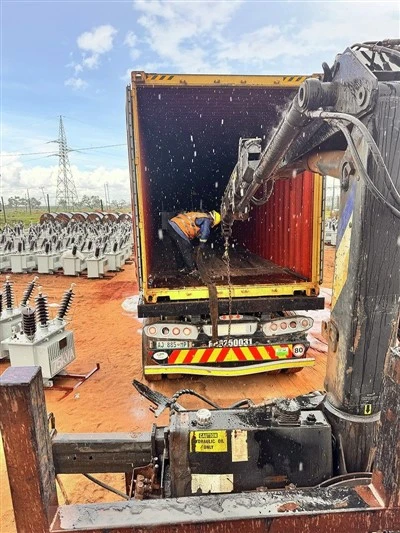
If you’re in the market for reliable, high-performance Ro-Ro equipment tailored to your operations, don’t hesitate to reach out to discuss your requirements. We’re here to support your terminal’s growth and efficiency every step of the way.
Oog Operations References
International Association of Ports and Harbors. (2023). Global Ro-Ro Terminal Capacity Survey.
United Nations Conference on Trade and Development. (2024). Annual Review of Maritime Transport.
Roll-on/Roll-off Industry Association. (2023). Regional Terminal Development Report.
World Bank. (2023). Infrastructure Investment in Emerging Market Ports.
Speed Supply Chain (Guangzhou) Co., Limited
Speed Supply Chain (Guangzhou) Co., Limited is a licensed NVOCC and first-level freight forwarder in China. With a professional team, we deliver reliable, efficient and cost-effective roll-on/roll-off service for global customers. If you have any enquiry about quotation, please feel free to email us.
Address: Room 2001-2002, Dongzhao Building, No. 515 Dongfeng Middle Road, Yuexiu District, Guangzhou, Guangdong, China
E-mail: mika.li@speedsucc.com
WebSite: https://www.speedsupplychain.com/
