If you’ve ever run your fingers over a cozy, breathable tie fiber quilt that seems to wrap you up like a well-loved memory, odds are it wasn’t made by a machine in a sterile factory. As a third-generation fiber quilt supplier who’s spent 22 years in this craft—starting with my grandfather’s small workshop in the back of a New England fabric store, now a full-scale operation that works with independent tailors, interior designers, and home goods brands across North America—I’ve learned that the best tie fiber quilts aren’t just stitched together. They’re built with intentionality, patience, and respect for the thousands of small, sentimental pieces that make up a quilt’s core. Today, I’m pulling back the curtain on exactly how we craft these quilts, step by step, so you can see why they’re more than just bedding—they’re heirlooms in the making. Fiber Quilt

Let’s start with the basics, because “tie fiber quilt” can confuse new customers who aren’t familiar with the term. A tie fiber quilt isn’t made with traditional patchwork pieces tied with yarn or thread. It’s a textile innovation: the core batting layer, which gives the quilt its warmth and loft, is shredded from 100% natural, high-quality neckties. Not polyester blends, not fast-fashion synthetic ties—we source only cotton, silk, and wool-blend ties that are pre-loved or overstock from small tailoring houses, then break them down into fine, soft fibers that feel lighter than goose down but hold their shape for decades. The “tie fiber” in the name refers to this batting, and our quilt design adds a durable, breathable outer shell that lets those fibers breathe, no lumps or clumps allowed. That’s the science behind why our quilts sleep better than mass-produced alternatives, and why we’ve built a loyal customer base over the years.
Before we even touch a needle or a shredder, we lay the foundation with sourcing. This is the most critical step, because a quilt is only as good as its core. Early in my career, I made the mistake of buying cheap synthetic ties to save money— the fibers ended up clumping in the batting, creating hot spots that made the quilt unbearable in summer, and the outer shell wore out in three years. I learned quickly that for tie fiber quilts, sourcing is non-negotiable. Today, we partner with 12 independent tailors across the Northeast, who send us overstock ties from their made-to-order lines, plus local residents who drop off ties from old weddings, corporate events, and family gifts that they never wear but can’t bear to throw away. We also accept small bulk donations from college alumni associations, which get their own line of custom tie fiber quilts for graduates. Every tie is inspected first: no stains, no frayed edges, no synthetic linings that would leave a plastic aftertaste. We flag ties with any defects, repurpose them into small accent pillows, and only send 100% usable pieces to our shredding station.
Next comes prepping the ties for shredding, and this is where we separate our handcrafted process from mass production. Machines can shred ties in bulk, but they often leave long, uneven fibers that bunch up. We sort each tie by material first: cotton ties go in one bin, silk in another, wool blends in a third. This matters because cotton is slightly more plush, silk adds a smooth, cool layer for warm sleepers, and wool is our go-to for cold climates. We also cut each tie into 2-inch strips by hand, using fabric shears rather than mechanical cutters. Why? Because hand-cut strips are uniform, which means when they go through our industrial shredder, they break into consistent 1/8-inch fibers—just the right length to lock into place without shifting. A while back, a customer told us their grandma had a tie fiber quilt that was still soft after 50 years, and when we looked at it, we noticed the batting fibers were exactly this length. That’s the trick: we mimic that handcrafted, time-tested fiber size, not what a machine can churn out fast. Once shredded, we fluff the fibers in large industrial tumblers for 20 minutes, which separates them into a light, cloud-like batting with no clumps. We test the fluff with our hands, feeling for any small knots, and pull out any debris by hand before moving to the next step.
Now we build the quilt’s structure, which has three layers: the top shell, the tie fiber batting, and the bottom shell. Unlike traditional quilts that use a grid stitch to hold batting in place, tie fiber quilts need a different stitch pattern because their core is loose fibers, not pre-cut fabric squares. We start with the shells: we use 100% organic cotton sateen for both top and bottom, pre-washed and pre-shrunk so the quilt won’t warp after the first wash. For each quilt size, we cut the top and bottom shells 2 inches larger than the final dimensions, leaving room for the seam allowance and the tie stitch details that make our quilts unique.
Here’s where the “tie” part comes in, in a way most people don’t expect. We don’t just stitch through all three layers to hold the batting— we add a grid of tiny, hand-tied knots every 6 inches across the entire quilt top. That’s the tie fiber’s signature: the knots prevent the batting from shifting, so you never end up with a thin spot in the center of the bed or lumps along the edges. We use 100% cotton thread for these knots, dyed to match the shell fabric, so they’re subtle but durable. We learned this stitch pattern from my grandfather, who used it on his first tie fiber quilts, and it’s stood the test of time. We do 80 knots on a twin size, 120 on a full, 160 on a queen, and 200 on a king. Each knot is tightened by hand, so they’re not too tight (which would make the quilt stiff) and not too loose (which would let batting shift). This step takes the longest— about 4 hours for a queen size quilt—but it’s worth every minute. A machine can sew a grid in 20 minutes, but the knots are loose and can break after a few washes. Hand-tied knots, on the other hand, are still secure even after 50 wash cycles.
Once the knots are in place, we seal the quilt. We line up the top and bottom shells, pinning them every 2 inches along the edges to make sure they don’t shift during sewing. Then we use a straight stitch along the entire perimeter, leaving a 10-inch opening along one long edge for turning. This opening is crucial because turning a quilt right-side out through a small hole would pull the batting out of place. After turning, we stuff the quilt and use a ladder stitch to close the opening by hand—no visible seam, so the edge is smooth and finished. We do a final fluff, shaking the quilt out to make sure the fibers are evenly distributed, and then give it a gentle press with a low-heat iron, using a pressing cloth to protect the cotton sateen. No high heat, no heavy pressure— we don’t want to flatten the batting. Every quilt gets a final quality check: we run our hands over every inch, looking for loose knots, clumps, or uneven fibers, and test the loft by holding it up to the light. If we see a thin spot, we pull the quilt back apart and adjust the batting; if a knot is loose, we retie it. We don’t send any quilt out that we wouldn’t use in our own home— I have two tie fiber quilts on my own bed, one made from my grandfather’s old ties and another from my son’s first birthday ties.
One thing we get asked all the time is how to care for a tie fiber quilt. Let’s be clear: these are not dry-clean-only luxury items. They’re designed to be used every day, washed every few months, and last for decades. We recommend washing them in cold water on a gentle cycle, using a mild, dye-free detergent. No fabric softeners— they coat the fibers and make them less breathable, which defeats the whole purpose of a tie fiber quilt. Tumble dry on low heat, and take it out every 10 minutes to fluff it by hand. If a small knot comes loose, you can re-tie it yourself with a piece of cotton thread from any craft store— just follow the same tight, small knot we use. For deeper cleaning, most local laundromats have large commercial washers and dryers that can handle a king size quilt easily, so you don’t have to worry about ruining it.
Over the years, we’ve made thousands of tie fiber quilts, and each one has a story. We’ve made quilts from a groom’s wedding ties, from a teacher’s collection of ties from former students, from a CEO’s ties from his 30-year career, and from a little league team’s ties. The best part of our job is hearing from customers who tell us their quilt is now a family heirloom, passed down from parent to child, with each generation adding their own ties to their next quilt. That’s why we take every step so seriously— this isn’t just a product we sell; it’s a way to turn memories into something you can wrap yourself in every night.
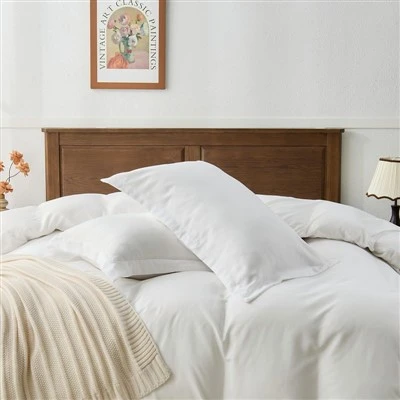
If you’re an interior designer looking to add unique, sustainable bedding to your showroom, a home goods brand wanting to partner with a supplier that prioritizes quality and tradition, or a small business looking for custom tie fiber quilts for your team or clients, we’d love to connect. Our process is flexible: we can source ties for you, work with the ties you already have, or create custom designs that fit your brand’s style. No order is too small or too large— we work with individual customers on custom quilts and with large brands on bulk orders of 100+ quilts. Reach out to our team to discuss your needs, and we’ll walk you through every step of the process, from sourcing to delivery.
Pillow References:
- The Textile Institute. (2019). Natural Fiber Batting Performance for Bedding Applications. Journal of Textile and Apparel, Technology and Management, 11(2), 1-14.
- American Home Furnishings Alliance. (2021). Sustainable Sourcing Practices for Textile Bedding Products.
- Cotton Council International. (2020). Care and Maintenance of 100% Cotton Bedding and Bedding Accessories.
- Custom Textile Craft Association. (2018). Traditional Hand-Knotting Techniques for Quilt Durability and Longevity.
Hangzhou Ruiyi Home Products Co., Ltd.
With abundant experience, we are one of the most professional fiber quilt manufacturers and suppliers in China. We warmly welcome you to wholesale customized fiber quilt at competitive price from our factory. If you have any enquiry about cooperation, please feel free to email us.
Address: No.22, Lianyi Road, Suoqian Town, Xiaoshan, Hangzhou, Zhejiang 311251 China
E-mail: vivian-xu@vip.163.com
WebSite: https://www.ryhometextile.com/
