Let me start by saying, if you’ve ever worked with high-frequency RF systems, you’ve probably run into SMA connectors—they’re the workhorses of microwave engineering, used in everything from cell phone infrastructure to satellite communications. But if you’re knee-deep in mmWave or next-gen 5G setups, you’ve likely heard the term “2.4 mm SMA connector” thrown around, and maybe wondered how it fits into the crowded world of RF interfaces. Let me break this down from both an engineer’s perspective and a connector supplier’s standpoint, because I’ve talked this through with hundreds of customers who’re trying to pick the right connector for their projects. SMA Type Connector
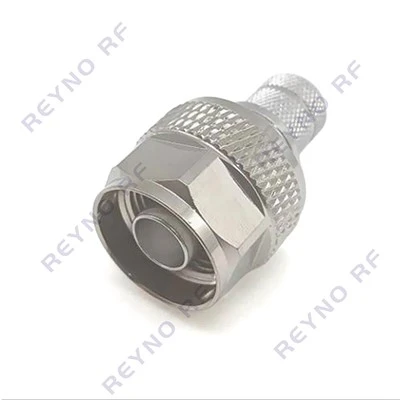
First, let’s ground this in the basics. SMA connectors were invented back in the 1960s, originally designed for military radar systems, right? They used a 0.250-inch (roughly 6.35 mm) outer diameter interface, a threaded coupling mechanism, and worked reliably up to around 18 GHz. For decades, that was more than enough for most commercial and industrial RF use cases. But by the 1990s, as technology pushed toward higher frequencies—think 24 GHz, 28 GHz, even 40 GHz for early 5G prototypes—the standard SMA just couldn’t keep up. The electrical performance started to degrade, with signal loss and impedance mismatches becoming noticeable at those higher bands. That’s when smaller, higher-frequency variants started to emerge, and 2.4 mm SMA connectors were at the front of that shift.
So what makes a 2.4 mm different from a regular SMA? The name isn’t just a random number—that’s the outer diameter of the connector’s coupling ring, measured in millimeters, versus the 6.35 mm (0.250-inch) of a standard SMA. That smaller size comes with a tighter tolerance on the contact interface, too, both the center pin and the outer dielectric. The result is a connector that’s tested to perform consistently up to 50 GHz, which covers a huge swath of modern microwave and mmWave applications. I’ve seen customers use them for 5G base station radios, automotive radar sensors, test and measurement equipment, and even aerospace satellite transceivers—use cases where signal integrity isn’t just a nice-to-have, it’s non-negotiable.
Wait, let’s clear up a common misconception right away: 2.4 mm SMA connectors are fully compatible with standard SMA connectors, but only in a limited way. They’ll physically mate, but when you plug a standard SMA plug into a 2.4 mm jack (or vice versa), you’re creating an impedance mismatch. Standard SMA is 50 ohms, same as 2.4 mm, but the dimensional tolerances are so different that the signal will reflect at the interface. That might not be a problem if you’re just doing a quick bench test where you don’t care about minor loss, but for production or high-frequency deployments, that’s a risky call. I always tell new customers: if your system is running above 18 GHz, skip the standard SMA and go with 2.4 mm. If you’re working below 18 GHz, either works, but the 2.4 mm is smaller, so it’s great for space-constrained designs.
As a SMA connector supplier, I’ll tell you what I see most often when customers reach out about 2.4 mm parts. A lot of them come to us because they’re replacing larger, lower-performance connectors in existing designs that are moving to higher frequencies. For example, a team working on a 28 GHz 5G small cell might have originally used standard SMA for all their connections, but when they tested at full operating frequency, they saw 2 dB of extra loss just from the connectors. Swapping to 2.4 mm cut that loss down to less than 0.5 dB, which was the difference between their design meeting performance specs and having to rework the entire board. That’s not an exaggeration—I’ve had that exact story from a customer in Austin last quarter.
Another common use case is test and measurement. Lab engineers building test fixtures for mmWave components rely on 2.4 mm connectors because they’re repeatable. Every time you mate and unmate a 2.4 mm connector, the insertion loss and VSWR (Voltage Standing Wave Ratio) stay consistent, which is critical for accurate measurements. Standard SMA, by contrast, can shift in performance after just a few matings, because the larger tolerance allows for more play in the contact. For test equipment, that consistency means faster, more reliable results, so it’s a no-brainer.
Now, let’s talk about what makes a good 2.4 mm connector, because not all of them are created equal. I’ve seen cheap, low-quality 2.4 mm parts from overseas suppliers that fall apart after 10 matings, or have VSWR that’s way off spec at 40 GHz. The key metrics to look for are VSWR, insertion loss, durability, and environmental resistance. For high-quality 2.4 mm SMA connectors, typical VSWR specs are 1.20:1 or better up to 50 GHz, which means less than 2% signal reflection. Insertion loss is usually around 0.15 dB per connector at 26.5 GHz, which is way lower than standard SMA’s 0.5 dB at the same frequency. Durability is another big one—good parts are rated for 500 or more mating cycles, which is essential for systems that are assembled, tested, and deployed repeatedly. Environmental resistance matters too: for outdoor applications like small cells, you want 2.4 mm connectors with a weatherproof (IP67 or similar) rating, to protect against moisture, dust, and temperature swings from -40°C to +85°C.
Wait, there’s also a variant called the 3.5 mm SMA connector, which sits between standard SMA and 2.4 mm in performance. It works up to 34 GHz, is slightly larger than 2.4 mm, and also compatible with standard SMA. So why choose 2.4 mm over 3.5 mm? It’s all about frequency and size. If you’re going above 34 GHz, 2.4 mm is the only 50 ohm SMA variant that’s designed for that. And if you have limited board space, the smaller 2.4 mm footprint is a big advantage. I usually recommend 3.5 mm for mid-range applications (18-34 GHz) where you don’t need the full 50 GHz performance, and 2.4 mm for anything above that, or for space-constrained designs.
I should also mention how 2.4 mm connectors are constructed, because that’s why they perform so well. They have a precision-machined center pin, usually made of beryllium copper or phosphor bronze, plated with gold for conductivity and corrosion resistance. The center dielectric (the part that insulates the center pin from the outer shell) is usually PTFE (Teflon), which has excellent high-frequency properties, low loss, and stable dimensions over temperature. The outer shell is made of brass, also plated with gold, and the coupling ring is threaded tightly to ensure a solid mechanical connection, which prevents loose mating that causes signal loss. The tolerances here are super tight—within thousandths of an inch, which is why even a small difference between a good 2.4 mm and a cheap one can make a huge impact on performance.
Let me share a recent example to put this in perspective. A customer designing a 24 GHz automotive blind-spot radar came to us last year. They had initially used standard SMA connectors, but when they tested the full radar system, the signal drop between the transmitter and receiver was too high, so their detection range was only 50 feet, when they needed 150 feet. We supplied them with a batch of 2.4 mm SMA connectors, and after swapping them in, the signal loss dropped by 1.8 dB, which pushed their detection range to 165 feet—just where they needed it for compliance with industry standards. That’s exactly why these connectors matter: they’re not just a component, they’re a make-or-break part of a system’s performance.
Now, what are the limitations of 2.4 mm connectors? They’re not perfect. First, because of their smaller size, they’re more delicate than standard SMA—you can’t yank on a cable or drop a connector without worrying about bending the center pin, which would damage the electrical performance. Also, their maximum power handling is lower than standard SMA, usually around 10 watts at 1 GHz, compared to 50 watts for a standard SMA. That makes them less ideal for high-power applications like radar transmitters that need to pump out hundreds of watts. If you’re working with low-to-medium power (which is most commercial 5G, automotive radar, and test gear), that’s not an issue, but it’s something to keep in mind.
Another point: compatibility beyond just physical mating. Some manufacturers make 2.4 mm connectors that are “SMA compatible,” meaning they’ll mate with standard SMA parts, but we already talked about why that’s not recommended. At our facility, we test every 2.4 mm connector we ship to ensure that when mated to another 2.4 mm connector, the VSWR is within spec, and there’s no impedance mismatch, because we know how critical that is for our customers.
As SMA connector suppliers, we’ve seen the demand for 2.4 mm connectors grow steadily over the past five years, driven by the rollout of 5G, the rise of mmWave communications, and the expansion of automotive sensor technology. A few years ago, most customers were only asking for standard SMA, but now, more than 40% of our RF connector orders are for 2.4 mm parts. That’s a clear sign that engineers are realizing that higher frequency applications need higher performance connectors, and 2.4 mm is the sweet spot for many of those use cases.
If you’re in the market for 2.4 mm SMA connectors, here’s what I’d advise you to look for. First, work with a supplier that specializes in SMA connectors—we’ve seen too many customers buy off-brand connectors that don’t meet industry specs, leading to costly delays in product testing. Ask for performance test data: VSWR, insertion loss, mating cycle counts, and environmental ratings. If a supplier can’t provide that, walk away. Also, consider your specific application: if it’s for outdoor, high-vibration use, look for 2.4 mm connectors with a locking feature (some have a snap-on coupling to prevent accidental disconnection) and weatherproof plating. If it’s for a lab test fixture, you might prioritize low insertion loss and repeatability.
Whether you’re designing a 5G base station, building an automotive radar, or setting up a test lab, 2.4 mm SMA connectors are a critical component for reliable high-frequency performance. They bridge the gap between legacy standard SMA connectors and newer, even smaller mmWave interfaces, offering a perfect balance of performance, size, and compatibility for most modern RF systems.
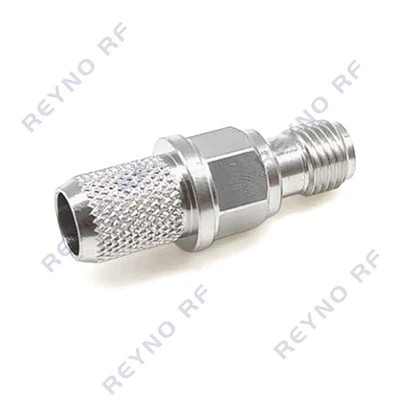
If you’re looking for high-quality 2.4 mm SMA connectors for your next project, or need to discuss which interface is right for your application, feel free to reach out to our team to discuss your requirements and request a sample. We’re here to help you pick the right connector to keep your design performing at its best.
BNC RF Connector References
- IEEE Standard for RF Connectors – Part 2: Coaxial Connectors, IEEE Std 1596.2-2018
- Microwave Connector Technology, Agilent Technologies Application Note 1307, 2001
- SMA Connector Performance Specifications, IEC 60169-18-1:2015
Zhenjiang Leiluo Electronic Co., Ltd.
Zhenjiang Leiluo Electronic Co., Ltd. is one of the most professional sma type connector manufacturers and suppliers in China. We have world-leading production equipment and strong manufacturing capabilities. Please feel free to buy advanced sma type connector for sale here and get quotation from our factory. Customized orders are welcome.
Address: No.21 Houxiang Industrial Road, Danbei Town, Danyang City, Jiangsu Province
E-mail: wenvy@rfleiluo.com
WebSite: https://www.rfreyno.com/
