Hey folks, Explosives Production Line

If you’re deep in the explosives production game (or just trying to wrap your head around why every step of the line matters), you already know quality control isn’t just a box to tick—it’s the only thing keeping the whole operation safe, compliant, and actually functional. As someone who’s been selling explosives production lines for over a decade now, I’ve seen firsthand how one tiny, lazy QC check can spiral into a mess that shuts down a site for weeks. Today, I’m breaking down the real, no-BS QC points we build into every line we design, the ones that aren’t just theoretical on a safety sheet—they’re the ones our clients actually use to keep their lines running smooth.
First up, let’s talk raw materials. This is the foundation of everything, right? If your starting ingredients are garbage, your final product is going to be garbage, no matter how good your processing is. I can’t tell you how many times a new client has told me, “We just use the supplier’s COA and skip testing batches because it’s faster.” Spoiler: that’s how you get inconsistent detonation velocity, or even accidental sensitivity during mixing. On our lines, we built two checkpoints into raw material intake, not just one. The first is a quick field test—we use portable NIR (near-infrared) scanners that give a read in 60 seconds to confirm the percentage of active compounds, no lab waiting around. The second is a random grab sample that gets sent to the on-site lab for full assay—we make sure the lab area’s right next to the raw material staging zone so there’s zero cross-contamination, and the test takes under two hours, not two days. We also flag for weird stuff like clumping in oxidizers (ammonium nitrate, usually) that might’ve gotten moisture in transport—moisture is a silent killer here, it can make the mix too insensitive to detonate, or too reactive in storage.
Next, the mixing process. This is where all those raw ingredients turn into the actual explosive matrix, and this is where 90% of QC slip-ups happen. I’ve worked with a coal mine client a few years back that had a bad batch of ANFO (ammonium nitrate fuel oil) because they under-mixed it—there were dry fuel pockets that wouldn’t detonate at all, and it’s a nightmare when you’re loading blasts for a mountain side. On our lines, we integrated real-time process monitoring into the mixers. Sensors track things like temperature (we keep it 35-40°C for most ANFO and emulsion mixes—too hot and you get premature reactions, too cold and ingredients don’t blend properly), torque (if the mixer’s fighting too much, that’s a sign of inconsistent material or clumps), and even the homogeneity of the mix via continuous sample testing mid-cycle. We set a hard stop if any of those metrics go outside the pre-programmed range—no exceptions. Also, we have a “kill switch” that locks the line down for a deep check if a batch is flagged, because rushing through a mix to hit a production target is never worth it.
Wait, let’s not forget about processing intermediate stages. A lot of people only focus on the final product, but there are steps between mixing and packaging that are just as critical. Take emulsion explosives, for example—after mixing, you pump the emulsion through a colloid mill to get the right particle size, right? If the mill’s set wrong, you get either particles that are too big (low detonation speed) or too small (too sensitive to shock during transport). On our lines, we add inline particle size analyzers right after the mill, so we’re not waiting until packaging to find out we messed up. We also check for air bubbles in the intermediate mix—trapped air is a big reason for dud rounds later. The analyzer can pick up bubble content down to 0.1% and adjust the pump pressure automatically to fix it, so operators don’t have to manually tweak every time. That’s the kind of small, built-in QC that saves clients hours of rework.
Then we get to the packaging and labeling stage—this is where the product’s ready to go out to the field, so you’d think QC would be strict here, but I’ve seen lines skimp on this too. The big ones here are package weight consistency and packaging integrity. If a 50kg explosive bag is 48kg or 52kg, that’s a safety issue—too light and you might under-load a blast, too heavy and you risk bag rupture during handling. On our lines, we use high-accuracy checkweighers that reject any package outside ±0.5% of the target weight, and they send a real-time alert to the control room if the weight’s off consistently, which usually means a problem with the filling nozzle. For packaging integrity, we use inline leak testers—most people just do a visual check, but that misses tiny pinholes that can let in moisture or cause leakage during shipping. The leak testers use pressure decay (puff a tiny amount of air into each bag and measure if it holds pressure) and they reject any bad bags before they even hit the pallet. Labeling’s another one—you’d be shocked how often a wrong lot number or hazard class label gets put on a package, which can lead to all sorts of compliance issues down the line. We integrated barcode scanners that cross-check every label against the batch data, so if there’s a mismatch, the line stops immediately.
Now, storage and holding QC—this is the part a lot of line suppliers don’t talk about, but it’s non-negotiable. We don’t just design the production process; we build monitoring into the intermediate and final storage areas that are part of our line packages. Temperature and humidity sensors that update every minute, not every hour—if a storage area’s too humid, it can degrade the explosive over time, especially emulsion products. We also track batch rotation strictly, using FIFO (first in, first out) protocols built into the line’s software, so no old batches are accidentally shipped after their shelf life. And here’s a big one: static control. Explosives and static don’t mix. Our lines have grounded conveyors, anti-static packaging materials, and even ionizers in areas where powder is handled, to eliminate static buildup before it becomes a hazard. We test all these static control points during installation and do quarterly calibration checks as part of our after-sales support, because even a grounded line can have a bad wire over time.
Oh, and operator competency—wait, that’s a QC point too, right? A machine is only as good as the person running it. We don’t just sell a line and dip. We provide hands-on training for every operator, focused specifically on QC checks, not just how to hit a production number. We run mock QC failures during training—like faking a raw material sample that’s low in active compounds—and make sure operators know how to spot the alert, pause the line, and follow protocol, not just hit the “continue” button because they’re in a hurry. We also have a QC checklist that’s built into the line’s touchscreen interface—operators have to sign off on every checkpoint (raw material, mix completion, intermediate processing, packaging, storage) before the line moves to the next stage, so there’s no cutting corners.
Wait, let’s be real—nothing is 100% perfect, so we also have final batch verification before shipment. Every batch has a sample sent to a certified third-party lab, but we also run our own in-line final tests: detonation velocity checks (using a speed of sound sensor that measures how fast the explosive detonates under controlled conditions) and sensitivity testing (small, controlled shock tests to make sure it’s not too sensitive or too insensitive). These tests take less than an hour per batch, so there’s no waiting around, and if a batch fails, we can isolate it immediately and reprocess it, instead of having to recall it later.
I get it—some of these QC steps might sound like they slow production down. But here’s the thing: a batch that’s rejected at QC is way cheaper than a blast that fails, or an accident that shuts your whole site for months. The clients who stick with us long-term aren’t the ones trying to skip QC; they’re the ones who see that investing in these checkpoints cuts their rework time by 30% and keeps their compliance records spotless. We’ve had clients come to us after a safety audit that fined them $200k because of poor QC, and they end up replacing their old lines with ours just for these built-in checks.
At the end of the day, explosives production is a high-stakes game, and QC isn’t just about quality—it’s about safety, compliance, and keeping your business running. We don’t cut corners on these QC points when we design a line, because we’ve been in this industry long enough to know that a line that skips key checks isn’t a line—it’s a liability.
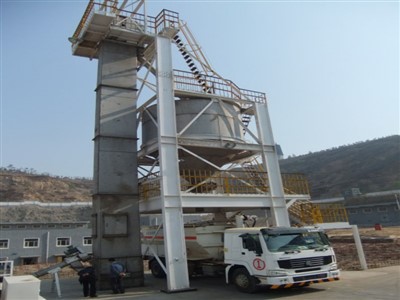
If you’re looking to upgrade your explosives production line, or just want to talk through where your current line might be falling short on QC, feel free to reach out to our team to chat about how we can tailor a line to your specific needs. We’re here to help you keep your operations safe, efficient, and compliant, no fine print or empty promises.
Explosives Production Line References:
- Institute of Makers of Explosives. "Safety Guidelines for Explosives Manufacturing, Storage, and Transportation." 2022.
- Occupational Safety and Health Administration. "Process Safety Management of Highly Hazardous Chemicals: Explosives and Blasting Agents." 29 CFR 1910.119. 2021.
- International Society of Explosives Engineers. "QC/QA Protocols for Commercial Explosives Production and Use." 2020.
Shanxi Honghu Special Purpose Vehicle Manufacturing Co., Ltd.
As one of the most professional explosives production line manufacturers and suppliers in China, we’re featured by quality products and good price. Please rest assured to buy bulk explosives production line in stock here and get pricelist from our factory. Also, custom service is available.
Address: No. 16 Nanhuan West Street, Changzhi Economic and Technological Development Zone, Shanxi Province
E-mail: sxczhh15035590669@163.com
WebSite: https://www.mixedexplosivestruck.com/
