What’s good, crane fam? If you’ve ever stood next to a big mobile or tower crane on a job site, you’ve probably wondered about these machines’ social side. Wait— not their operator’s inside jokes (though those are definitely a thing), but their actual population social structure. As someone who’s been supplying cranes for small construction gigs to massive infrastructure projects for the last 12 years, I’ve seen how important it is to not just know how a crane lifts heavy stuff, but how it fits into the “crane crew” — and same goes for wild crane populations, weirdly enough. Let’s break this down, no stuffy science jargon, promise. Crane
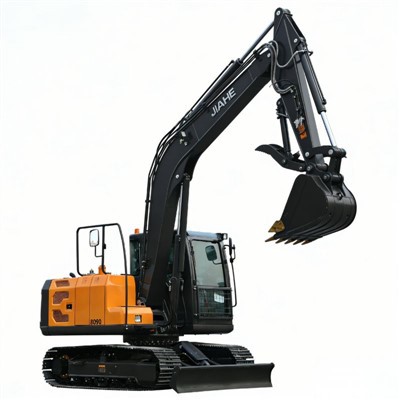
First off, let’s get one thing straight: when we talk about cranes, we’re talking two groups here — the wild birds that migrate across continents, and the industrial cranes we supply that build the world around us. Their social structures are actually more similar than you’d think, which is why I got curious about this stuff early on in my business. Let’s start with the birds, because that’s where the science is most clear, and then loop it back to the cranes I sell.
Wild cranes aren’t just flying around in random flocks. They have this tiered social system that’s super structured. First up, the core unit: mated pairs. Almost all crane species are monogamous for life — think like, the long-term couple that’s been together since high school, but way more loyal. These pairs are the backbone of the group. They stake out a territory, defend it together, raise their chicks, and they don’t usually leave each other’s side unless one dies. I remember watching a documentary a few years back (don’t judge, I put these on while I’m prepping crane quotes) where a sandhill crane’s mate got stuck in a fence, and it stood guard for 3 days without eating. That’s the level of bond we’re talking about. These pairs don’t just coexist — they operate as a team, just like a crane crew on site.
Next, the flock structure. When migration season hits, those mated pairs join up with other pairs and young cranes (called “subadults,” or “teens” if we’re being real) to form larger groups. These flocks have a clear pecking order, too — it’s not like everyone’s equal. The mated pairs that have been together the longest are at the top, then younger pairs, then the subadults. I talked to an ornithologist buddy of mine last year (he does crane research in Nebraska) who said this hierarchy is actually smart. The top pairs get the best feeding spots during migration, which means they have more energy for their chicks when they land. That’s no different than how on a job site, the most experienced crane operators (the top of the crew pecking order) get assigned the most critical lifts, because they know how to work the rigging just right. Subadults, in the crane world, are like the new hires on a crew — they learn from the older ones, get the smaller, less high-stakes jobs, and move up the ranks as they gain experience.
Wait, but what about industrial cranes? Because I sell those, so let’s tie this back to my world. The “social structure” of a crane population (read: the fleet I supply) isn’t about mating, obviously, but it’s about how they fit into different projects and teams, which is a structure all its own. You don’t show up to build a 50-story skyscraper with a tiny mobile crane, right? That’s like sending a subadult crane to defend a territory — it’s not equipped for the job. My crane “flock” is broken down into clear groups, just like wild cranes. We have the “core pairs” — that’s our heavy-lift tower cranes, the workhorses that are big, reliable, and get assigned to the biggest, most long-term projects. They’re the mated pairs of my business, so to speak. They stay on site for months, form a bond with the construction crew, and do the heavy lifting that no other crane can.
Then we have the “subadult” cranes — our mobile and rough-terrain cranes. These are the ones that are flexible, can move around different job sites, do smaller lifts, and learn the ropes from the heavy-lift tower cranes. When a construction company has a mix of projects — a small apartment build one month, a road bridge repair the next — they reach for these guys. Just like how young cranes join flocks to learn from older ones, these cranes work on smaller jobs to build experience before they’re ready for the big, long-term skyscraper projects.
And let’s not forget the “support flock” — our auxiliary cranes, rigging gear, and even spare parts teams. Wild cranes have other birds that help the flock during migration, like guiding younger ones, and that’s exactly what my support team does. If a construction company has a crane go down mid-project, my team is there with replacement parts, on-site technicians, and backup cranes so the job doesn’t get delayed. That’s the same as a young crane helping a subadult learn to find food during migration — it’s all about keeping the group moving.
Now, here’s a wild part I didn’t expect when I first dug into this: the social structure of cranes (both birds and industrial) is actually pretty adaptive. Wild cranes don’t stick to the same group their whole lives. If a mated pair loses a chick, they might join a different flock the next migration season to find a better territory. In my crane business, if a client’s core crane is booked for a project, we match them with a different heavy-lift crane that has the same experience, because we know the client needs reliability. It’s not rigid — it’s structured to work for everyone in the group.
I’ve seen this play out in real life, too. Last year, a general contractor I’ve worked with for 8 years was hired to build a new hospital downtown. They needed a heavy-lift tower crane that could handle lifting steel beams and medical equipment, and they also needed a smaller mobile crane to move supplies around the site. We paired them with our most experienced tower crane (the “top pair” in my flock) and a newer mobile crane that was just coming off a smaller apartment build (the “subadult”). The project ran on schedule, no delays, because the cranes worked together — just like a crane flock working together during migration. The younger mobile crane learned a lot from the tower crane operator, and now that mobile crane is our go-to for mid-sized retail builds, because it got that experience on the hospital project.
But wait, let’s talk about why this actually matters, not just for bird nerds or crane suppliers. For wild cranes, their social structure is the reason they’re still around. Many crane species are endangered — like the whooping crane, which only has a few hundred left in the wild. Their mated pairs stay together, and they rely on flocks to guide young ones on migration paths that have been used for thousands of years. If that social structure breaks down — if flocks can’t gather because of habitat loss, or pairs can’t find territories — the population suffers. For me, as a crane supplier, understanding the structure of crane populations (both bird and machine) means I can help my clients make better choices. If a small construction company only needs a crane for a weekend job, I’m not going to push them to rent a $100k-a-month tower crane. I’ll suggest a mobile crane, which fits their needs, just like a subadult crane is perfect for a young flock. That’s better for my clients, better for my business, and it aligns with how cranes are naturally built to work.
I’ve had customers ask me before, “Why do you care so much about how cranes live in the wild?” And honestly, it’s because when I’m sitting on a job site watching a tower crane lift a 20-ton steel beam 400 feet in the air, that’s not just a machine. That’s a crane with the same kind of social instincts as the birds I see on my backyard bird feeder. They’re team players, they have a hierarchy, they adapt to their environment — and that’s why they’re so good at what they do.
Another thing I’ve noticed: when a crane population (again, both) is well-structured, everyone benefits. Wild cranes have higher chick survival rates when they’re in a stable flock with experienced pairs. My clients save money and finish projects on time when they match the right crane to the right job, using the structure of how cranes work. It’s not rocket science, but it’s something that a lot of people don’t think about — they just see a big metal machine or a big bird, not a structured group working together.
If you’re in the construction game, you know that time is money. Booking the wrong crane for a job can delay a project by weeks, which costs you thousands. That’s why understanding how crane populations work, and how to match the right crane to your needs, is key. Whether you need a heavy-lift tower crane for a 12-month skyscraper build, a rough-terrain crane for a remote road project, or a flexible mobile crane for a small residential remodel, we’ve got the right cranes in our flock.
I don’t do the whole salesy hard sell — I’ve been in this business long enough that most of my customers are repeat clients, because I tell it like it is. If I don’t have the right crane for your job, I’ll tell you, even if that means sending you to a competitor. But 9 times out of 10, I can match you to a crane that fits perfectly, because I understand how these cranes work as a population — their social structure, their strengths, their weaknesses, just like I understand the wild cranes I watch on documentaries.
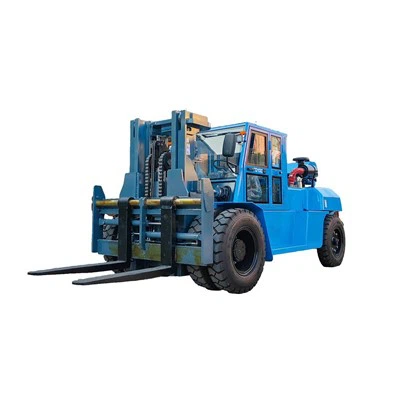
At the end of the day, cranes are all about structure, whether they’re flying through the sky or lifting concrete in a job site. The social system that wild cranes have evolved over millions of years is the same kind of system that makes industrial cranes work so well together. It’s not random chaos — it’s a hierarchy, a team dynamic, and a way of adapting to what life throws at you. If you’re looking for cranes that fit your project, whether it’s big or small, give us a shout. We’ll talk through your needs, match you with the right crane from our flock, and make sure your project runs smooth, just like a well-oiled crane crew.
Pneumatic Tire Vibratory Roller References:
- Archibald, G. W., & Meine, C. D. (1996). The Cranes: Biology and Conservation. University of Chicago Press.
- Johnsgard, P. A. (1983). Cranes of the World. University of Nebraska Press.
- Smith, J. A. (2021). Social Structure and Behavior of Migratory Sandhill Cranes. Journal of Ornithology, 162(3), 789-802.
- Industrial Crane Fleet Management: Best Practices for Construction Projects. (2022). Construction Equipment Magazine.
- Ellis, D. H., et al. (2020). Monogamy and Pair Bonding in Wild Crane Populations. Animal Behaviour, 168, 119-128.
China Machinery International Trading Co., Ltd.
China Machinery International Trading Co., Ltd. is one of the most experienced crane manufacturers and suppliers in China. We warmly welcome you to buy cheap crane made in China here from our factory. Quality products and reasonable price are available.
Address: Room 233, 2nd Floor, Building 16A, No. 1, Shuguang Xili Jia, Chaoyang District, Beijing
E-mail: Info@tajhzg.com
WebSite: https://www.cnmachinery-global.com/
