Hey there, if you’re running a machine shop, you know how big of a pain lathe noise can be—right? I’ve been in this game as a conventional lathe supplier for over 12 years now, and I can’t tell you how many times I’ve heard shop owners complain about it. It’s not just a nuisance, either. OSHA (wait, that’s the Occupational Safety and Health Administration, for anyone new here) has strict noise limits to keep your guys’ hearing safe, and constant high-level noise doesn’t just lead to long-term hearing damage—it cranks up stress, makes it harder to focus, and even kills productivity. Plus, if your shop’s in an area with noise ordinances, you might get fined or have to cut down on evening shifts. A lot of folks think the only fix is buying a fancy new CNC lathe, but nah—your old conventional lathe can be way quieter with some targeted tweaks, and I’ve helped dozens of shops nail this without dropping a ton of cash. Conventional Lathe
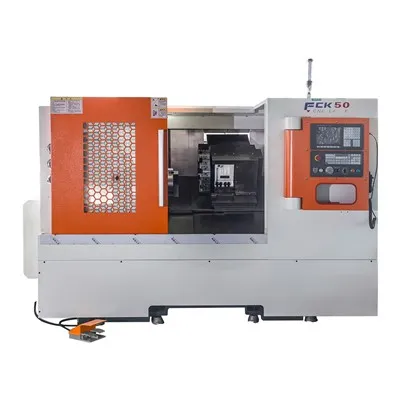
First off, let’s break down where that noise is coming from. Most conventional lathe noise falls into three buckets: mechanical rattle, cutting process noise, and airborne noise bouncing around your shop. Let’s start with the easiest fixes because those will give you the biggest bang for your buck. I see so many shops skip this, but loose parts are a silent noise culprit. I’m not just talking about the obvious stuff like the chuck key left in the chuck (that makes a terrible clank when you fire it up—seen that more times than I can count). Check every moving joint: the carriage nuts, the leadscrew bearings, the tailstock clamp, even the gearbox cover bolts. Over time, vibration works those loose, and each one turns into a tiny noise machine. I always tell my customers to do a “quick tighten check” every couple of weeks, but also to add a thread locker to the smaller fasteners (the non-load-bearing ones, obviously—don’t go locking down your carriage nut!). It’s a 10-minute job that can knock off 5-10 dB right there, and every dB counts—since noise is measured on a log scale, a 10 dB drop is perceived as half as loud to the human ear.
Next up, lubrication. This is another super common miss. If your lathe’s gears, bearings, and ways are running low on old or dirty oil, that causes metal-on-metal grinding, which is brutal noise. I get it—shops are busy, and oil changes for old machines feel like a chore, but it’s non-negotiable. Not only does fresh, manufacturer-recommended lubricant cut noise, it also extends your lathe’s life, so it’s a win-win. A lot of guys I work with use a multi-purpose EP (extreme pressure) gear oil, but make sure you don’t over-lubricate—too much oil can whip up into foam, which causes more splash noise. Pro tip: wipe down excess oil after a lube job, and listen closely when you turn the lathe on—if it’s making a gurgling sound, you probably put too much in.
Now, let’s talk about the cutting process, because that’s where a lot of the noise is generated at the source. If you’re running too fast a spindle speed or too aggressive a feed, that’s going to make your tool bite into the workpiece hard, creating that high-pitched squeal we all hate. I tell every new customer when they pick up their lathe: start slow, and adjust gradually. For example, if you’re turning a steel bar, crank the spindle speed down a bit—most conventional lathes are way faster than you need for many jobs, and going at a moderate speed cuts down on tool chatter (that’s the vibrational noise from the tool jumping on the workpiece). Chatter is a big one, and it’s not just about speed—your tool choice matters too. Using a dull cutting tool is like dragging a knife through butter; it forces the workpiece to vibrate, turning into noise. Sharpen your tools regularly, and make sure they’re properly set in the tool post—too much overhang on the tool holder makes it flex, which causes more chatter. I’ve had guys cut their cutting noise by almost 15 dB just by switching from a high-speed steel tool to a carbide insert tool for rough cuts—carbide is harder, holds an edge longer, and makes much cleaner cuts with less vibration.
Then there’s airborne noise, which is all the sound waves bouncing around your shop walls, ceiling, and even other machines. If your shop’s got hard concrete walls and metal ceilings, noise just echoes, making the whole place way louder than it actually is. This is an easy fix too—you don’t need to line every wall with foam panels (though that works). Start with the easiest, cheapest add-ons: rubber or neoprene pads under the lathe. These act as vibration isolators, so the noise the lathe makes doesn’t transfer to the floor or the foundation, which would make the whole shop shake and amplify noise. I usually recommend ¼-inch thick closed-cell rubber pads—they hold up to heavy machinery, don’t absorb oil, and only cost a few bucks per square foot. Another trick: add a simple acoustic hood or cover for the lathe’s gearbox and motor. A lot of off-the-shelf hoods fit most conventional lathes, and they block a ton of the high-frequency noise from those moving parts. Just make sure you leave enough room for ventilation—you don’t want to overheat your lathe because you sealed it too tight.
Wait, I should address something I hear all the time: “My lathe is really old, can these fixes even help?” The answer is yes—we just sold a 1982 Clausing lathe to a shop in Detroit, and they worked with us to add vibration pads, tighten up the gearbox, and swap out their cutting tools. They called us a month later saying their noise levels dropped from 92 dB (which is above OSHA’s 90 dB limit for an 8-hour shift) to 81 dB, which is totally safe. A lot of people write off old conventional lathes as noisy junk, but that’s not the case—they’re built like tanks, they just need a little TLC to run quieter. If you’ve got a really beat-up old lathe that’s on its last legs, upgrading some parts might not be worth it, but most mid-20th century and newer conventional lathes will benefit from these tweaks.
I also want to talk about what not to do, because I’ve seen some really bad advice online. Don’t try to wrap your lathe in a bunch of cheap moving blankets—they’re not dense enough to block noise, and they’ll get oily and gross fast, plus they can be a fire hazard near hot metal. Don’t crank up the spindle speed to “quiet down chatter” either—faster speed doesn’t fix chatter, it makes it worse. And don’t skip regular maintenance to save time—you’ll end up paying more in the long run when loose parts or worn bearings cause more noise (and even damage to the lathe itself).

If you’re still struggling with noise after trying these steps, or you need help figuring out exactly what’s causing the rattle in your specific lathe, my team and I are here to help. We’ve been supplying conventional lathes to shops like yours for years, so we know these machines inside and out. We can walk you through a quick noise check over the phone, recommend the right parts for your lathe model, or even help you put together a maintenance plan to keep noise levels down long-term. Whether you’re looking for a new or used conventional lathe, or just need tips to make your existing one quieter, don’t hesitate to reach out—we’re happy to help you keep your shop safe, productive, and stress-free.
Horizontal Machining Center References
Occupational Safety and Health Administration. (2023). Noise and Hearing Conservation. U.S. Department of Labor.
Machinery’s Handbook. (2020). Conventional Lathe Maintenance and Vibration Control. Industrial Press.
National Institute for Occupational Safety and Health. (2022). Noise Reduction for Industrial Machine Tools. CDC.
Henan Rowdai Machinery Equipment Co., Ltd.
As one of the most professional conventional lathe manufacturers in China, we’re featured by quality products and good price. Please rest assured to buy high-grade conventional lathe for sale here from our factory. If you have any enquiry about cooperation, please feel free to email us.
Address: Building 9, E-Commerce Industrial Park, High-Tech Zone, Zhengzhou, Henan, China
E-mail: rowdai@rowdai.com
WebSite: https://www.rowdai.com/
