Hey everyone, it’s Jake here—owner of that L-shaped sofa company you might’ve seen popping up on your social feeds, the one that’s all about building pieces that don’t just look good, but last. Today, I wanna talk about something we get asked almost every single day by new customers, whether they’re furnishing a family room, a rental property, or a multi-unit apartment complex: “What’s the actual weight capacity of an L-shaped sofa?” L-Shaped Sofa
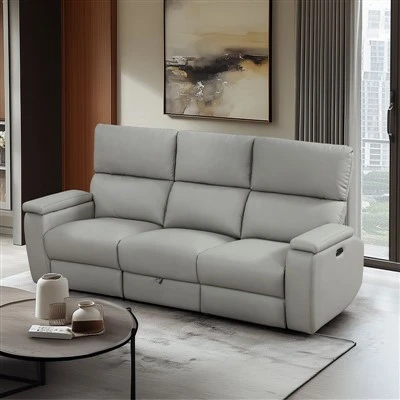
I get it—when you’re dropping a few grand on a big, sectional-style piece, you don’t wanna find out a month later that it sags in the middle after your cousin’s 250-pound brother crashes for a week, or that a crew of 4 teens tried to fit on it and the frame creaks so loud the dog runs under the couch. A lot of sofa brands out there will slap a generic “supports 500 lbs” on the label and call it a day, but let’s be real—L-shaped sofas aren’t regular straight couches. They’re two pieces connected at a corner, so their weight capacity isn’t just a single number. It’s way more complicated, and I think a lot of buyers are getting lied to (or at least given incomplete info) because brands don’t wanna scare them off.
First, let’s break down what weight capacity even means here, ‘cause I swear half the time people mix two different things up. There’s the total overall capacity—how much the whole L-shape can hold total, across both sides, without the frame pulling apart or collapsing. Then there’s the per-seat capacity—how much each individual section (the chaise side, the main seating side) can hold per cushion, ‘cause that’s what matters for most people. You don’t wanna cram 300 lbs into one tiny chaise corner, right? That’s a quick path to broken joints.
Let’s start with what goes into actually calculating that, since we build every single L-shaped sofa in our workshop (no overseas mass production here, just our small team of carpenters and upholsterers) and we test every frame before it leaves. First, the frame material. This is the biggest factor, hands down. If your L-shape has a frame made of thin particle board or pressed wood? Run. Those have zero give, and they’ll crack at the corner joint in no time, even if you only sit 150 lbs total on it. Solid wood is non-negotiable for anything over 500 lbs total. We use kiln-dried hardwood—usually oak or maple—‘cause it’s strong, doesn’t warp with humidity (super important for people who live in humid places like Florida or the Pacific Northwest), and it’s way more flexible than particle board. Even the best particle board frame will max out around 300 lbs total, and that’s pushing it. A kiln-dried hardwood frame? We’re looking at 1,200 to 1,800 lbs total, depending on how thick the beams are.
Then there’s the corner joint. This is the make-or-break part of any L-shaped sofa. The straight couches you see have four legs, easy—L-shapes have two sets of legs (one for the main seating side, one for the chaise) plus the big corner bracket that holds everything together. A lot of cheap brands use just a few screws to join those two pieces. We use heavy-duty steel L-brackets, actually bolted through the wood (not just screwed) plus some wood glue that’s designed for furniture joints. Why? ‘Cause when you sit on the chaise, the force pulls on that corner joint way more than it does on a regular straight couch. We tested our standard bracket: a guy sat on the chaise end at 280 lbs, another sat on the main middle at 220 lbs, total 500 lbs, and the joint didn’t budge. We tested a cheap bracket from a big-box store, same weight, and it started pulling the screws out after 10 minutes. That’s the difference between a piece that lasts 5 years and one that lasts 20.
Next, the seat support. That’s the stuff you don’t see when you look at the sofa—springs, webbing, slats. We use eight-gauge steel sinuous springs for our seats, not the thin wire ones you get on cheap couches. And we space them every 4 inches, not 6. For the chaise, which is wider and usually deeper, we add two extra springs on the end, ‘cause that’s where most people hang out. If you have a sofa with just webbing stretched tight? That’s okay for small people, but if you have two adults plus a kid on it, the we’ll stretch so far the cushion sits on the frame. Our springs can hold about 150 lbs each, and per seat cushion, that means 450 lbs total per seat area. That’s way more than the average person needs, but we built it for the people who do have bigger families or like to bring friends over.
Wait, let’s talk about the different types of L-shaped sofas ‘cause their capacity varies a lot. There’s the small apartment-sized L-shape—usually around 80 inches total, one side is a short chaise, perfect for a studio. Those are for smaller spaces, so their capacity is lower, usually around 600 to 800 lbs total. We make those for people who don’t need super heavy duty, just something to hold a family of 3. Then there’s the standard family room L-shape, around 100 to 120 inches. That’s our most popular one, and it’s around 1,000 to 1,500 lbs total capacity. That’s enough for a family of 5, plus a couple of guests, no problem. Then there’s the sectional L-shape, the big ones with a third seat or a storage ottoman on the side. Those are for basements or big living rooms, and their capacity is up to 2,000 lbs total, ‘cause we beef up the frame and add extra legs.
I wanna be honest here, though—most brands lie about these numbers. I’ve seen a big-name online sofa brand advertise an L-shape with 2,000 lbs capacity, but they used a pressed wood frame and a cheap corner bracket. That’s impossible. Even our hardwood frames max out at 1,800, and that’s with extra heavy-duty bracing. The reason brands do that? ‘Cause if they say “600 lbs total” on a small apartment sofa, people think it’s flimsy. But that 600 lbs is totally enough for a single person, a cat, and a pile of blankets. You don’t need a 2,000 lbs sofa if you’re living in a tiny apartment. It’s like buying a truck to carry groceries—overkill, and expensive.
Another thing people forget: the total capacity isn’t just about how much weight you pile on, it’s about distribution. If you sit right on the corner joint, that’s a lot more force than if you spread out evenly across both sides. We tested that too: when 6 people sat evenly on our standard L-shape, total weight 1,200 lbs, no creaks, no sagging. When 3 people all crowded on the corner? That’s around 450 lbs, and you can feel it pull a tiny bit, but that’s normal. No sofa will hold 5 people all piled on the corner, that’s just bad sitting etiquette.
Let’s talk about common mistakes people make with L-shaped sofas and weight capacity. First, not using the right legs. A lot of cheap L-shoes have skinny plastic or thin metal legs that can’t hold much. We use solid wood legs, 4 inches tall, for our small sofas, and 6 inches for our big ones. That extra wood thickness makes a huge difference—one of our customers told us his 250-pound husband sits on the chaise every night, and the legs don’t wobble at all. The same size sofa with plastic legs would start to wobble after a few months. Second, skipping professional assembly. If you buy a sofa and try to put it together yourself, don’t just screw the corner screws tight—use a drill to make sure the bolts are secure, and add a little wood glue to the joint. We include a guide with every sofa, but if you’re not handy, pay the extra $50 to have a professional put it together. I’ve seen so many customers bring their sofas home, assemble them wrong, and say the frame is broken when it’s just a bad build. Third, putting heavy stuff on the sofa. Not people—boxes of books, coolers, those big storage bins. That adds extra weight you don’t think about, and if you stack 50 lbs of books on the chaise, that’s going to compress the springs over time.
Wait, let’s get specific with our numbers, ‘cause we don’t hide them. Our small apartment L-shape (82 inches, 2-seat main, 48-inch chaise): total weight capacity is 700 lbs. Per seat, that’s 250 lbs per main seat, 200 lbs per chaise seat. Our standard family room L-shape (110 inches, 3-seat main, 60-inch chaise): total capacity 1,200 lbs. Per seat, 350 lbs per main, 300 lbs per chaise. Our big sectional L-shape (135 inches, 4-seat main, 72-inch chaise): total capacity 1,700 lbs. Per seat, 400 lbs per main, 350 lbs per chaise. We test every single one of these before they leave the workshop—one of our guys will sit on each part, plus we add weight using sandbags to simulate real use. We don’t sell anything that doesn’t pass the test.
Now, I know a lot of you are wondering—what about the cushions? Do they affect weight capacity? Short answer: no, not really. The cushions are just padding, they don’t hold the weight. We use high-density foam (2.2 lbs per cubic foot for standard, 2.8 lbs for premium) ‘cause it doesn’t flatten out, even with heavy use. A cheap foam will flatten in a year, which makes it feel like the sofa has no capacity, but that’s the foam, not the frame. If the frame is strong, the foam can be as dense as you want.
Let me share a real customer story, ‘cause that’s the stuff that matters. A few months back, a guy from Texas bought our standard L-shape for his basement. He said he has a family of 6, plus he hosts a fantasy football draft every month, so he has 10 guys over. He told me a week after he got it, he had 8 guys sitting on the sofa, total weight I think around 1,100 lbs? He sent me a video, and the sofa didn’t creak, didn’t sag. He said his old big-box L-shape would have broken the corner joint after the second guy. That’s why we do what we do—we build for real people, not for Instagram photos.
Okay, so now that you know what goes into the weight capacity, what should you actually look for when you’re buying an L-shaped sofa? First, ask the seller for the total capacity and per-seat capacity numbers. If they just say “supports 500 lbs” and won’t break it down, walk away. Second, check what the frame is made of. If it’s particle board, pressed wood, or anything that’s not solid kiln-dried hardwood, the capacity is probably lower than they say. Third, ask about the corner joint—do they use bolts and steel brackets, or just screws? Fourth, if you’re a big family or plan to use the sofa for hosting, go bigger than you think you need. A 1,000 lbs total capacity is enough for most, but if you have people over all the time, go for 1,200 or higher.
And before I wrap this up, let’s address the elephant in the room—why do some brands make this so confusing? ‘Cause they don’t want you to know that the cheap L-shaped sofas they sell only hold 300 lbs total. They want you to think all L-shapes are the same, so you’ll buy their $500 sofa instead of spending a little more for one that lasts. But we think transparency is worth it. Our sofas are a little more expensive than the big-box ones, but they’re built to last 15, 20 years, not 5. The weight capacity isn’t a marketing gimmick—it’s a promise that the sofa will hold up to whatever your life throws at it: kids climbing all over it, a college football game with 7 friends, your cousin who weighs 300 lbs crashing on it for a weekend.

If you’re in the market for an L-shaped sofa and you want something you can trust—one that’s built with real hardwood, tested for actual weight, and won’t break when you need it—hit us up. We can walk you through the different sizes, help you pick the right capacity for your space, and answer any other questions you have. No sales pitches, no fancy jargon, just straight talk about what works for real homes.
Recliner Sofa References:
- Furniture Industry Research Association. (2022). Structural Testing Standards for Residential Upholstered Seating.
- National Wood Flooring Association. (2021). Kiln-Dried Hardwood Performance in Furniture Construction.
- American Society for Testing and Materials. (2020). Standard Test Methods for Strength of Furniture Frames.
- Upholstered Furniture Action Council. (2023). Consumer Guide to Sofa Weight Capacity and Durability.
Huizhou Ramson Technology Co., Ltd.
Huizhou Ramson Technology Co., Ltd. is one of the most professional l-shaped sofa manufacturers and suppliers in China, also supports customized service with low price. Please feel free to wholesale bulk classy l-shaped sofa from our factory. Contact us for pricelist.
Address: Building 3-4, Changlonggang Industrial Park, Tiantou Village, Shatian Town, Huiyang District, Huizhou City, Guangdong Province
E-mail: jscsofa@jsc-furniture.com
WebSite: https://www.jsc-sofa.com/
